
Technology, Shared Mobility and Integrated Transport Beyond the Electric-Car Debate, Flying cars, Self-driving vehicles and beyond
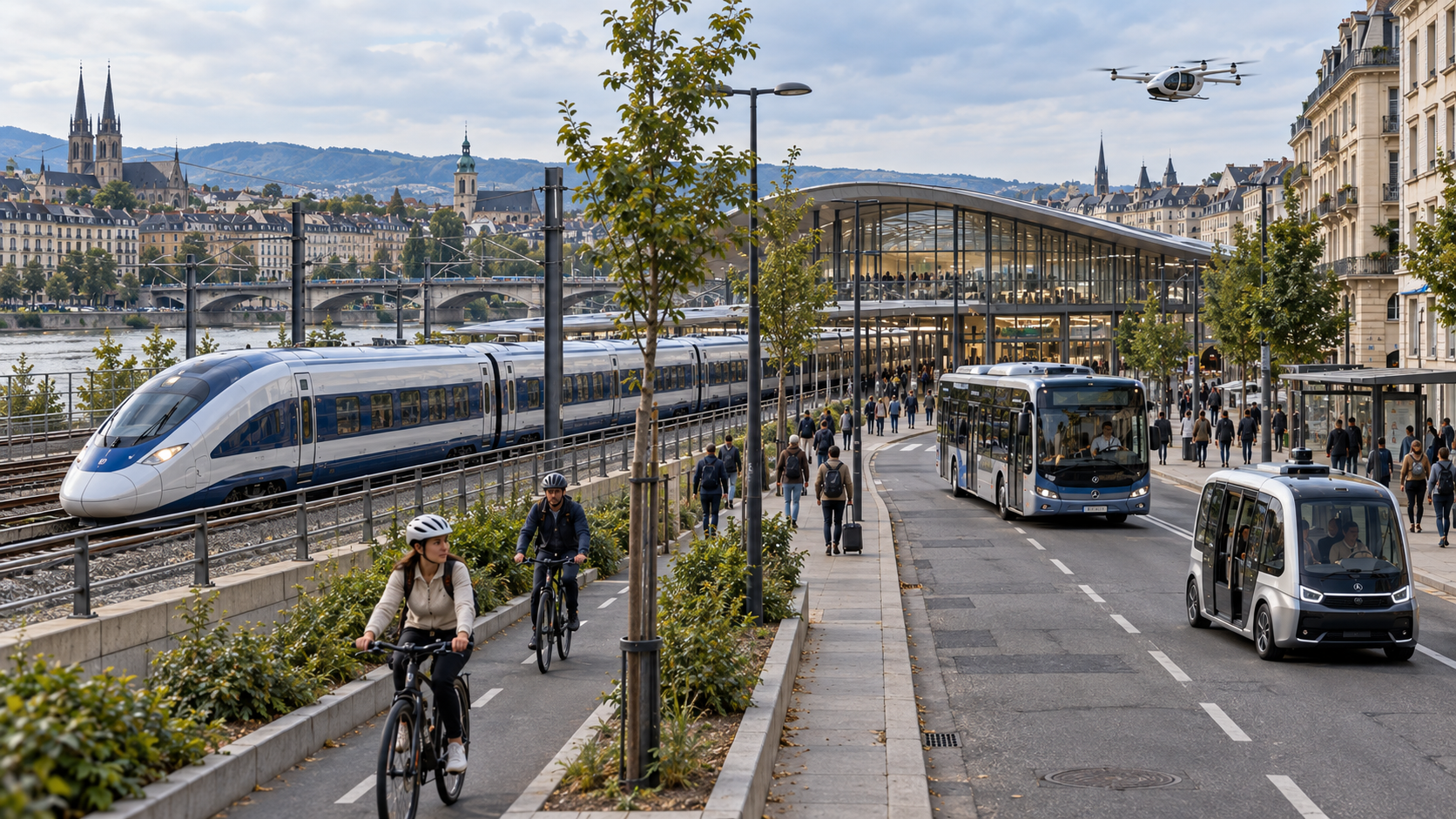
Private cars remain parked for approximately 95% of the time. Yet cars account for more than half of the distance people travel worldwide. This contrast raises a question that goes beyond the choice of engine: how can mobility make better use of our time, money, energy and urban space?
Cars have enabled extraordinary gains in freedom and economic opportunity. But a vehicle designed to carry four or five people at high speed is not necessarily the best answer to every journey. A short urban trip, a rural connection and travel between major cities require different solutions. The next transformation in mobility will come from matching the right mode to the right journey and making those modes work together not just by electrifying the cars.
Global mobility by mode, 2025
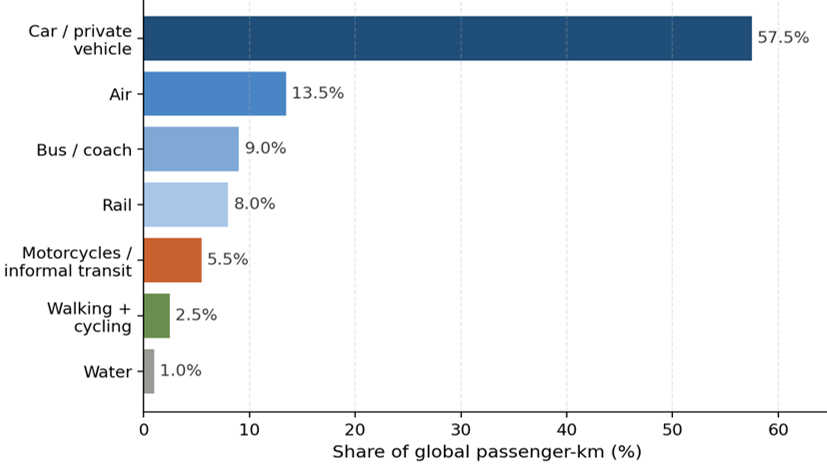
Schäfer and Victor (1997); ITF (2023); Vision estimate.
Electrification is an essential part of this transformation. Global electric-car sales exceeded 20 million in 2025, accounting for 25% of new-car sales, including battery-electric vehicles and plug-in hybrids. ICCT estimates that battery-electric cars sold in the European Union in 2025 generate 73% fewer lifetime greenhouse-gas emissions than petrol cars, including vehicle and battery production.
These gains matter. Yet changing the energy source does not, by itself, resolve the underuse of vehicles, the space occupied by parking or the difficulty of reaching destinations without a private car. The future of mobility also depends on how vehicles are accessed, shared and connected to public transport.
Electric mobility: growth and adoption
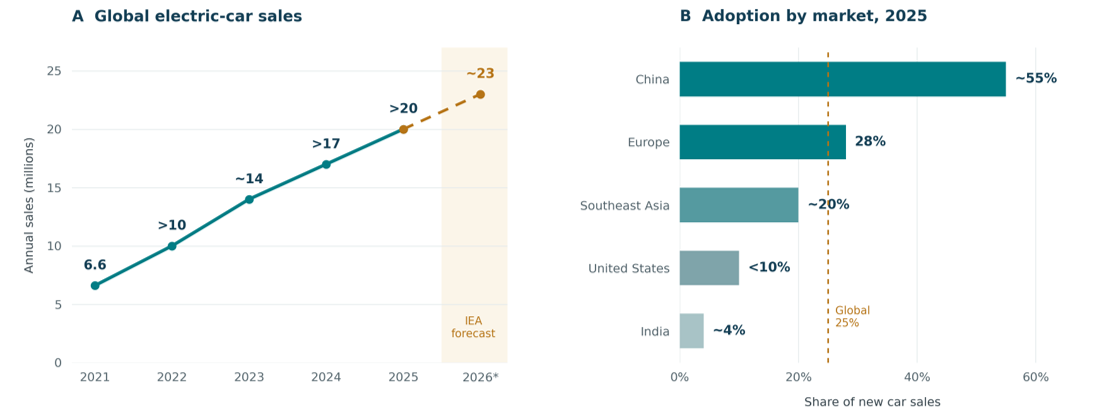
Figures include battery-electric vehicles and plug-in hybrids. Historical sales are rounded; 2026 is a forecast - IEA (2022–2026).
Some of the possibilities are visionary: autonomous vehicles and low-altitude air mobility could change who can travel independently, how journey time is used and how geographical barriers are crossed. Their contribution, however, depends on safety, affordability, occupancy and integration with ground transport.
Other innovations build on familiar technologies - High-speed rails, ownership models and managing regulations and legacies for the better and sustainable future of mobility.
The paper brings together where these would make sense based on income per person, adjusted for purchasing power, and population density to examine different mobility needs and investment possibilities. Dense settlements can support rail, public transport and cycling; dispersed populations often require more flexible vehicle-based services. These measures provide a starting point for decisions, rather than a single model for every country.
Income and density shape the mobility mix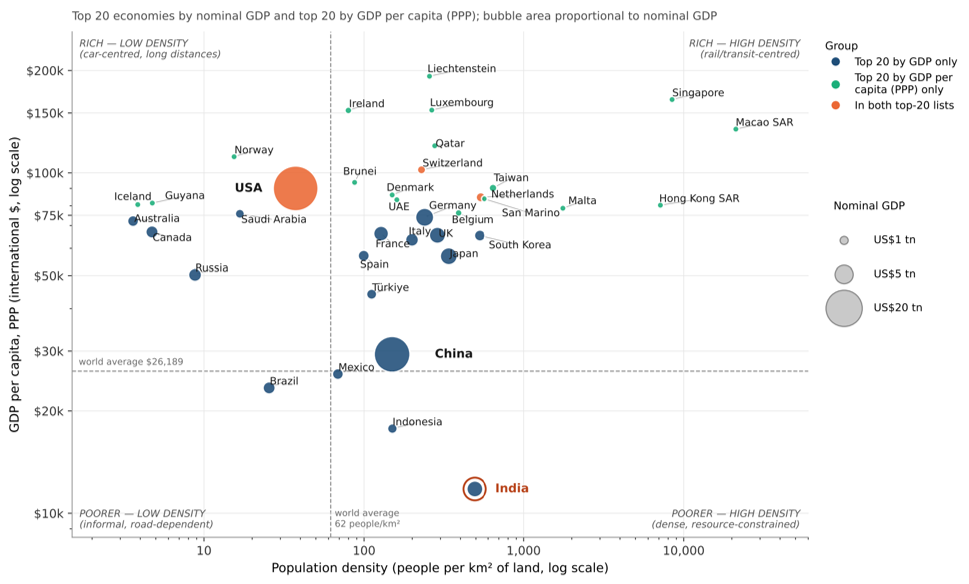
IMF World Economic Outlook (April 2026); World Bank; UN World Population Prospects (2024); Vision analysis.
Connecting these options is as important as developing them. Intelligent infrastructure can coordinate traffic signals and warn vehicles of hazards, while integrated platforms can bring journey planning, booking and payment into one service.
The central proposition is practical: future mobility should improve accessibility, efficiency, affordability and quality of life not just the speed. This paper sets out a flexible roadmap beyond the electric-car debate, exploring how technology, ownership and system integration can turn individual innovations into a more useful mobility system.
The study was conducted by:
Francesco Grillo, Vision Director
Shrikant Bacha, Vision Associate
Linus Wendel, Vision Associate