
Prevention, Insurance and Public Finance for Climate Resilience.
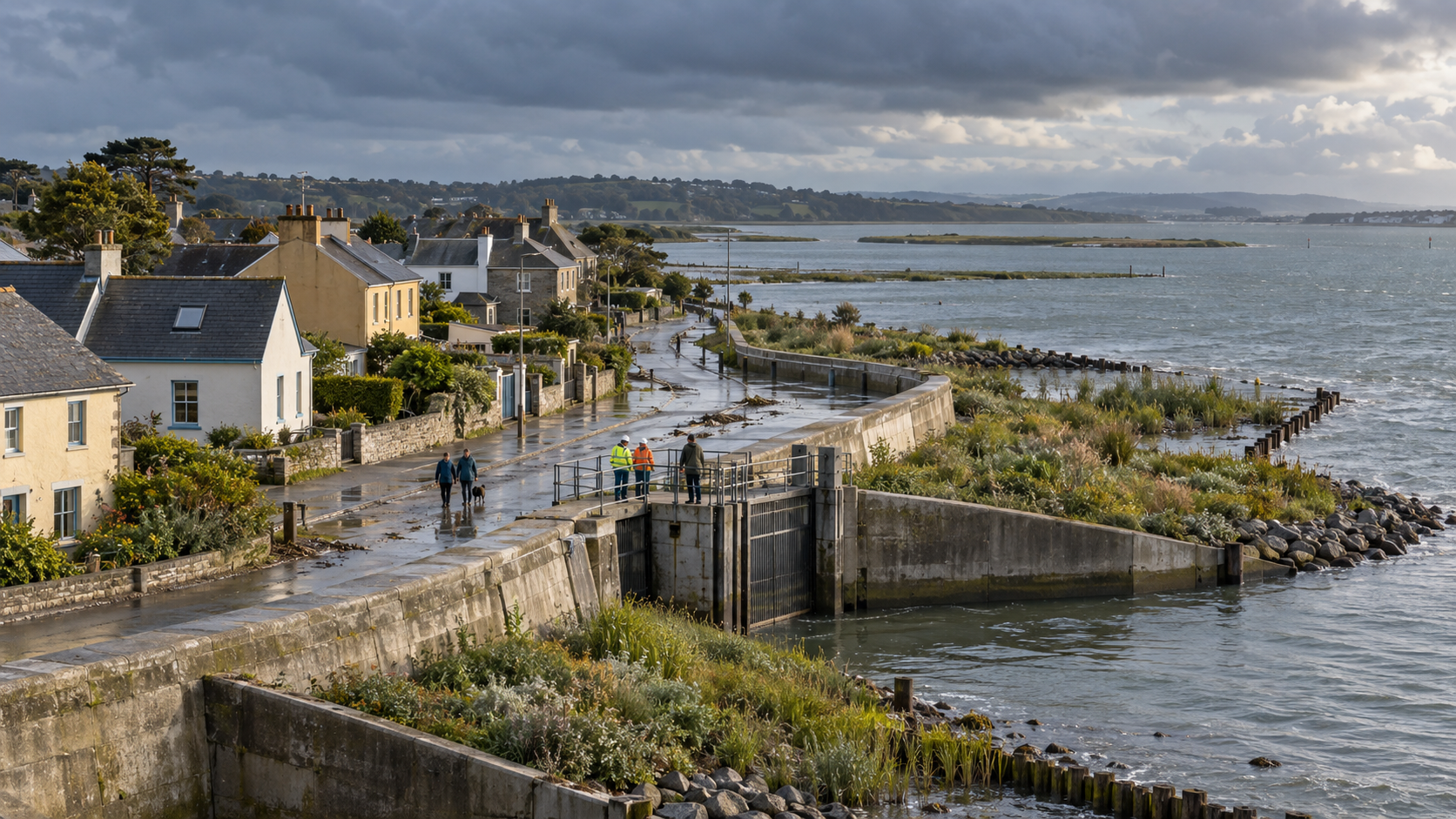
How can limited climate funding protect more people as losses continue to grow? We believe the Fund for Responding to Loss and Damage (FRLD) can help answer this question by connecting financial support after disasters with investment that reduces risks before they occur.
The scale of the challenge demands a different approach. There are nearly 180 submissions requesting approximately USD 2.8 billion in support, against around USD 350 million available to allocate. Estimates place annual loss-and-damage needs at USD 400-800 billion by 2030. Greater contributions are essential, but so is a model that makes each public dollar go further.
Established at COP27 and operationalised at COP28, the Fund represents an important achievement in international climate cooperation. We see an opportunity to build on that foundation: a Fund that finances prevention, enables insurance where it can provide effective protection, and preserves public grants for losses that remain beyond the reach of markets.
We propose a layered resilience and risk-financing model with three complementary functions:
- Prevention and adaptation: financing measures that reduce the likelihood or severity of damage.
- Risk transfer: enabling insurers and reinsurers to cover remaining measurable risks, with the Fund addressing affordability gaps and absorbing a defined initial share of losses where necessary.
- Residual loss and damage: retaining public grants for uninsured or uninsurable losses, including slow-onset impacts and non-economic loss.
Our central principle is “just enough” public support to make protection viable. Where prevention lowers risk, insurance premiums and the Fund’s contribution should decline. This would allow scarce public resources to support additional protection while preserving grants for communities whose losses cannot be prevented or insured also reconsidering who should contribute and who should receive support. We propose contributions based on financial capacity and cumulative emissions, with eligibility determined by vulnerability, limited adaptive capacity and inability to obtain insurance. This approach recognises that exposure and the capacity to recover vary within countries as well as between them.
Making this partnership work requires clear accountability. How do we ensure that public funding expands protection rather than sustaining private returns? We propose independent risk assessment, competitive underwriting and transparent evaluation to ensure public funding expands protection. Dedicated grants would remain essential for slow-onset impacts, non-economic losses and uninsurable risks.
We would test the model through contrasting pilots, measuring coverage mobilised per public dollar, risk reduction, payout performance and benefits reaching vulnerable communities.
Our ambition extends beyond a new financing mechanism. By bringing together public authorities, insurers and technical expertise, the Fund could also help communities learn which adaptation measures work, where they work and at what cost.
In this paper, we set out how the FRLD could become a blueprint for a climate agenda that connects prevention, financial protection and public responsibility and how that proposition could be put to the test.
The study was conducted by:
Francesco Grillo, Vision Director
Linus Wendel, Vision Associate