Ideas to make the green agenda popular again
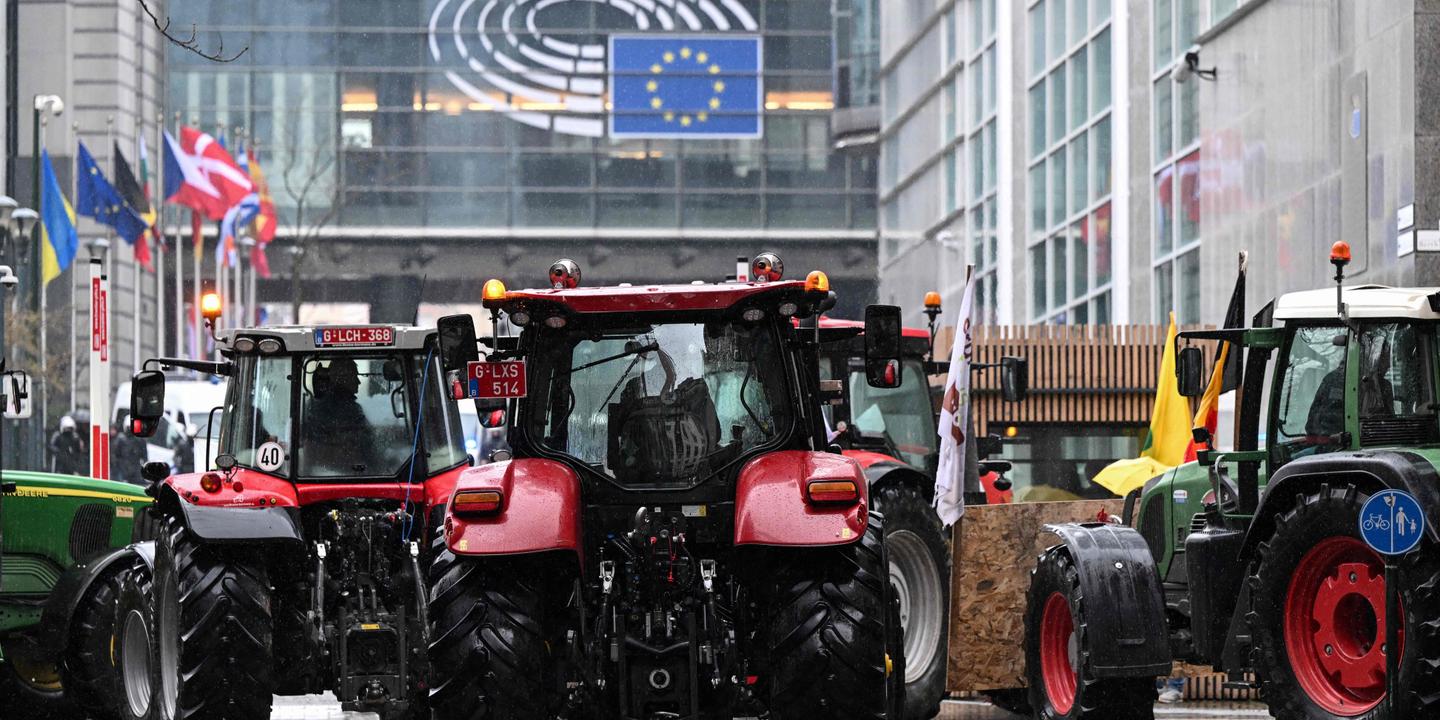
Agrifood sits at the center of a structural paradox. It is a major contributor to global greenhouse gas emissions, yet it is also one of the sectors most exposed to the consequences of climate change. Droughts, heatwaves, extreme weather events and declining yields put pressure on profitability, employment and food security. Responsibility and vulnerability coexist within the same system.
The climate footprint is not evenly distributed across the value chain. Certain productions (particularly livestock and dairy) generate significantly higher emissions than other food categories. At the same time, the entire agricultural system depends on increasingly unstable climatic conditions. This double exposure fuels tensions between producers, policymakers and public opinion, especially when climate regulation is perceived as an additional burden rather than a transition strategy.
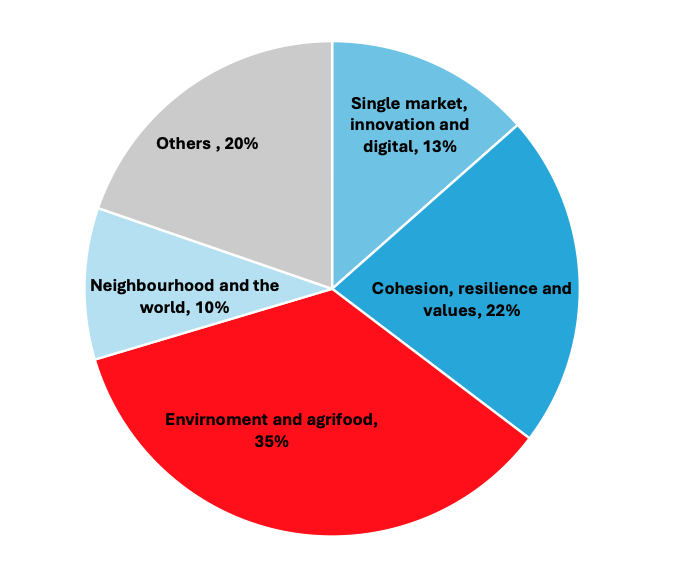
The issue is not only environmental; it is structural and economic. European agrifood benefits from substantial public support, yet struggles to fully align incentives, business models and climate objectives. Without a clearer integration of sustainability into the sector’s economic logic, the gap between environmental ambition and financial viability risks widening.
EU annual budget distribution by category (2021-2027)
Source: EU Commission
The levers for change are tangible. Lower-emission technologies, digitalized and more efficient supply chains, market mechanisms that reward sustainable practices, and clearer information tools to guide consumer choices can all accelerate the transition. Reforming agricultural policy frameworks can shift subsidies from passive support to active drivers of innovation and resilience.
Businesses play a decisive role. Integrating climate risk into long-term strategy, investing in adaptation, strengthening governance and transparency standards: these are no longer optional adjustments, but conditions for future competitiveness.
Overcoming the agrifood paradox requires recognizing that climate, markets and governance are not separate arenas. They are interconnected dimensions of the same transformation.
The study was conducted by:
Francesco Griilo, Vision Director
Valerio Rosa, Vision Associate
Jing Wang, Vision Associate
Chiara Mezzogori, Vision Associate