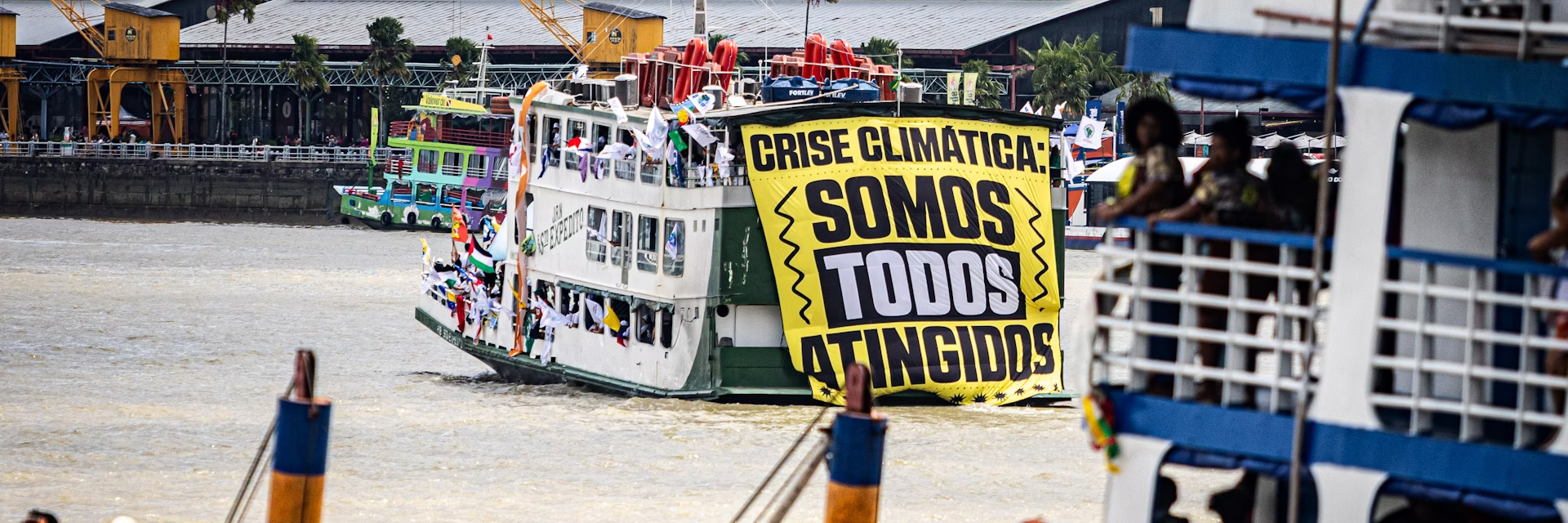
The “defining battle of our time”
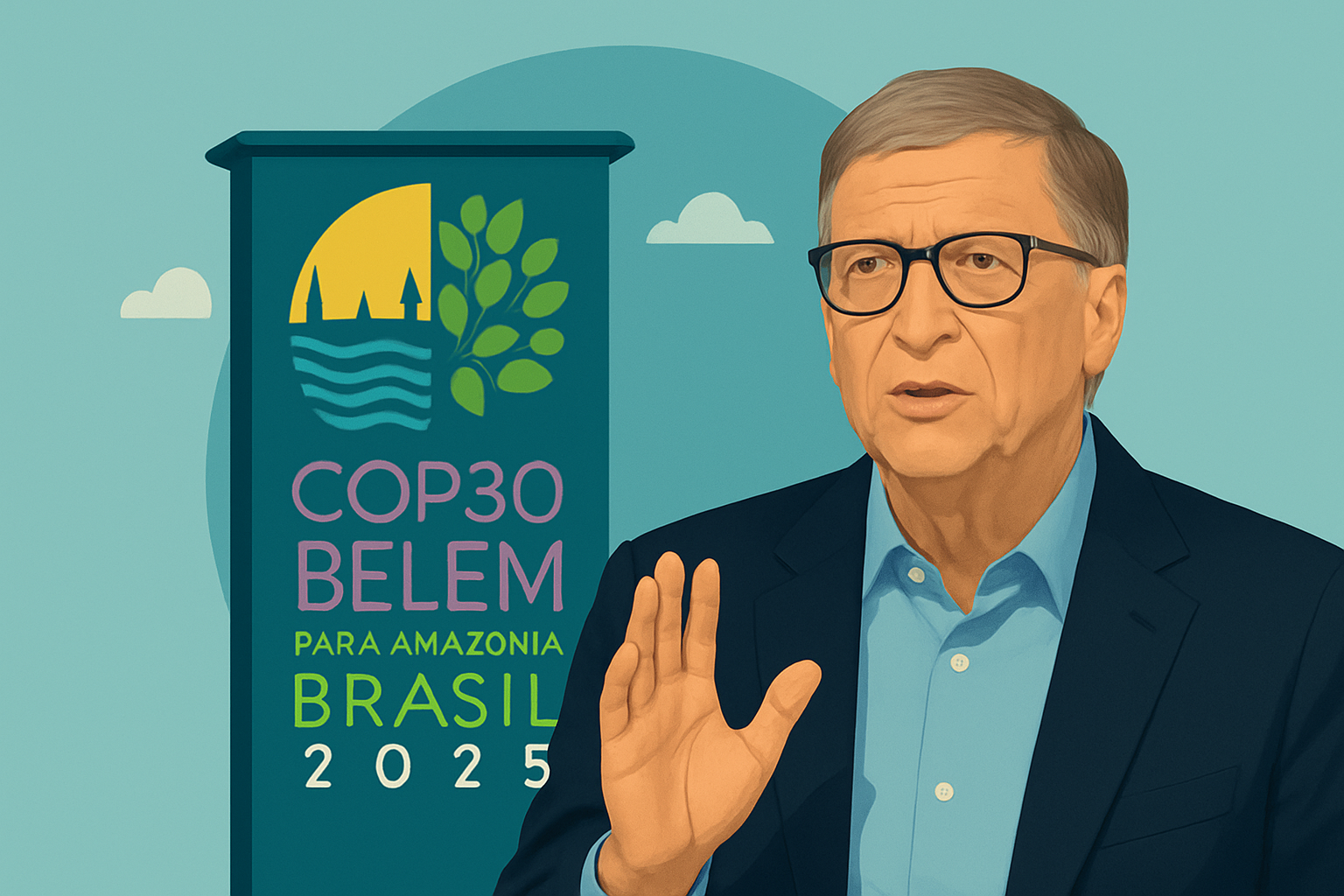
An article by Francesco Grillo. Version in Portuguese on The Conversation
What is left of what has been called the “defining battle of our time”? Climate change has probably been the most powerful reminder that we all live on the same, rather small planet.
This has been probably the reason why the agenda for fighting global warming has been so successful for few decades; but also the explanation of why, more recently, we (especially the rich countries) have lost “enthusiasm for combating the climate crisis” (as the President of “the UN conference of Parties on climate change” - COP, André Correa do Lago recently put it at the eve of the first day of the COP happening in BELEM). We are losing trust in our capabilities to govern globalisation, and it has been Bill Gates, the founder of MICROSOFT turned into philanthropist, who recently shed a light on what went wrong. He did so paradoxically because its “three tough truths about climate change” are, at least partially, not true. And yet they clearly indicate three strategic mistakes that we (the Western people) have recently made. A pre-COP conference – held in Venice a few weeks before the BELEM event – gathered about one hundred managers, students, academics, policy makers and journalists, and produced a manifesto proposing a different approach.
It is sadly not even remotely true what Bill Gates and other “moderates” are saying about a climate challenge that is subsiding. It does not soothe anybody that “even if the world takes only moderate action to curb climate change, the current consensus is that by 2100 the Earth’s average temperature will probably be between 2°C and 3°C higher than it was in 1850”. First, because crossing the 2°C red line established by the Paris Agreement (binding all countries of the world except Iran, Libya, Yemen and the .. United States) would be very likely enough to tigger at least 6 of the 16 tipping points beyond which climate change goes out control (amongst them scientist expect the collapse of the Greenland and the West Antarctic Ice sheets while the oceanic coral reefs seem already about to die). Second, even the very source mentioned by Gates – CLIMATE TRACKER – provides a much bleaker forecast (an increase in temperature that will be between 2.2 and 3.4 - with a 10% chance that the increase will be higher than 3,6 – if current policies stay about the same).
More worryingly, many projections – including Climate Tracker’s ones - tend to have a problem. Systematically, every single year, numbers tend to be both disappointing as far as the year that has just gone by (they found out that the emissions had been greater than expected) and more optimistic as far as what is going to happen in 2050 or 2100. It looks like the more we lag, the more we tend to become convinced that we will recover the time lost in the future. The sober reality is that, according to the EU observatory Copernicus, temperatures are already 2.4 degrees higher than in 1850 if we consider the very continent – Europe – where I am writing this article. And the consequences are visible: in the sixties the Dolomites hosted 33 glaciers; of these only 9 are still alive. Gates is right to say that we will not have an Armageddon. However, what is at stake is the survival of some of the defining features (including skiing and some of the world’s most beautiful coastal cities) of the very (industrial) society that created the problem.
The second mistake that Gates (not only him) continues to do is that we need to choose between different publicly desirable goods where to spend scarce resources. Between, for instance, vaccines and making farming practices sustainable in developing countries. Indeed, the trade-off may be a fake one because both investments can yield stellar returns. If we only find the right metrics. A vaccine that costs 100 USD is estimated to add 1 year of life free of diseases per person: it should not be difficult to translate such an additional year into an impact that investors can appreciate. Saving the Amazon from being transformed into a savannah is supposed to yield oxygen, which is six times more valuable than the revenues coming from logging. Here, the real challenge is not about allocation of scarce resources; but a much wider rethinking of the mechanisms through which prices in financial markets and elsewhere reflect the future. This is where the recent conference comes in with a strong pledge to start redefining the metrics that businesses and asset managers use.
Third, the idea of the “green premiums”. The notion is that the production of the energy we need, unavoidably requires an extra cost if that energy is to have a lower footprint. Whereas Gates seems to be optimistic on whether technologies are enough to mitigate climate change, here he seems to paradoxically underestimate what those technologies have already achieved. Renewable energies are – according to the World Energy Outlook just released bu the International Energy Agency at COP30 – are much cheaper than fossil ones. And they do not only come with a “green discount” that make them much more accessible to billions of people who are suffering energy poverty. They also offer a model of energy production that is much more stable because less dependent by few suppliers.
Technologies are increasingly capable to even more than an optimist like Bill Gates seems to think. The only obstacle that we need to remove is not about not-enough progress, but about the (often unfair) resistance from (fossil) incumbents. The Venice manifesto is rather clear on that: we should see climate change not just as somebody that divide good people and bad ones; developing and developed worlds; but as a battle between innovators and defenders of a ”status quo” that is politically stronger in the western countries.
The “tough truth” about climate change is that we – in the so-called WEST – have done the mistake to think that these global questions (not only climate change but also famine, for example) can be left to entrepreneur turn into philanthropist when they retire and decide to “give back” (half of) their fortune. The coalition that projects like the conference of Venice, are putting together is different. It is made of people who put question like climate change at the centre of their strategy. Companies – like the Chinese BYD or insurance like AXA – that understand that sustainability will make the difference between success and business extinction. Academics that eventually realized that climate change force them to make research with the purpose to find possible solutions. Media that try to build on climate change narratives that can create communities around ideas. Policy makers that see globalization as a challenge and not a threat from which to withdraw in impractical nationalism.