BEYOND COP
October 15–17 | San Servolo Island
Sustainability as a Competitive Advantage and a Frame for Adapting to a Post 1.5 Degree World
THE FRAMEWORK OF THE CONFERENCE
The global climate agenda is at a critical turning point. Three decades after the first COP, recent negotiations during the COP30 in Bélem have exposed growing political deadlock, weakening engagement from key global actors, and declining visibility from major corporations and media.
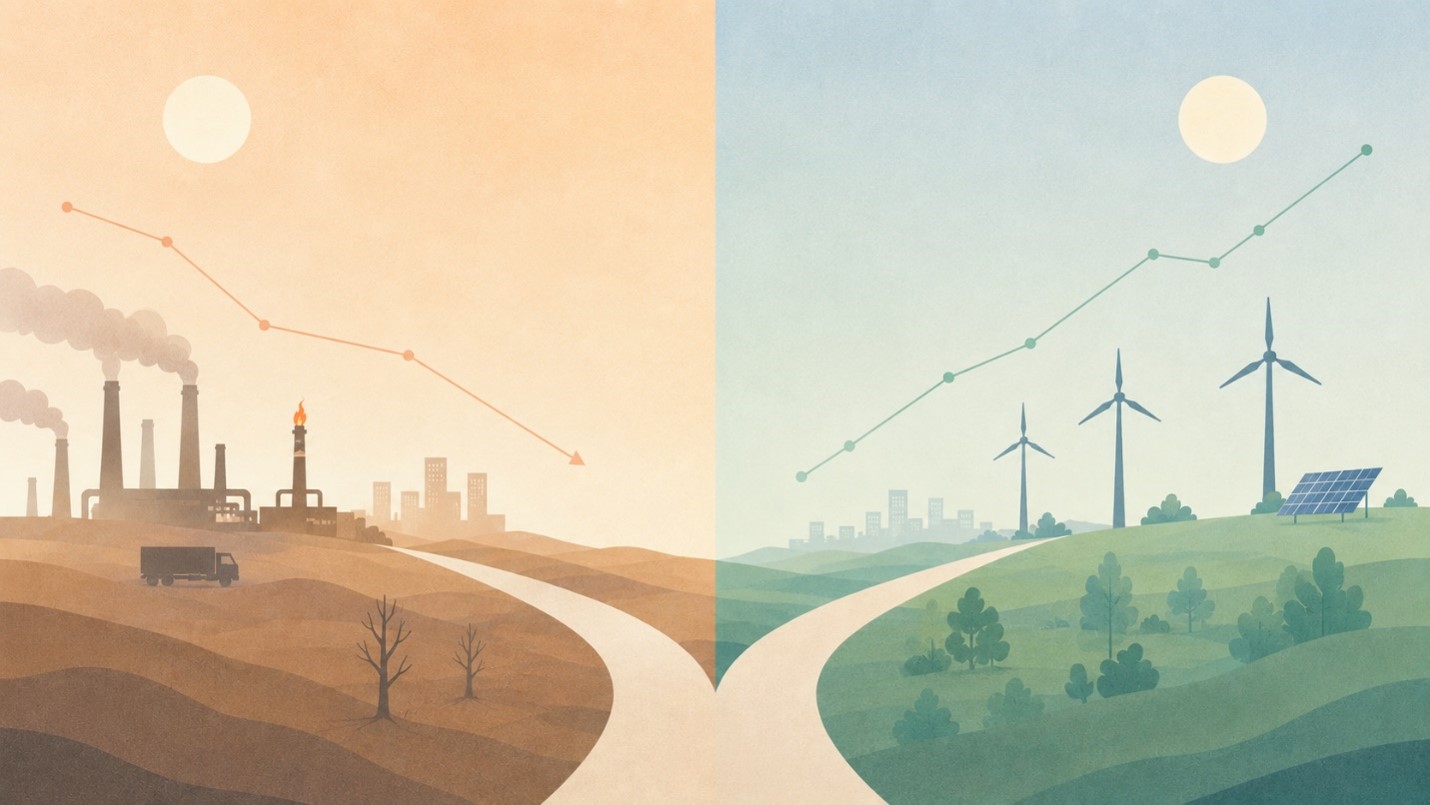
Yet, paradoxically, while political momentum slows, technological progress is accelerating, especially across the "Global South", where innovation is rapidly reshaping the path away from fossil fuels. At the same time, while Western governments are growing sceptical, firms are becoming even more convinced that sustainability is a competitive advantage.
It is clear that climate change is no longer a distant threat. It is a lived reality. Rising temperatures, already exceeding the 1.5°C threshold globally and significantly higher in parts of Europe, signal that mitigation alone is no longer sufficient. Adaptation and resilience must now become central pillars of the agenda.
The urgency is compounded by the risk of climate tipping points (irreversible thresholds that could trigger self-reinforcing environmental collapse). From the Amazon to polar ice sheets, these systemic risks are interconnected and increasingly imminent.
This evolving landscape demands a shift in mindset. The real divide is no longer between believers and skeptics, but between innovators and defenders of an unsustainable status quo. Climate action must move beyond moral narratives toward scalable solutions, economic opportunity, and systemic redesign.
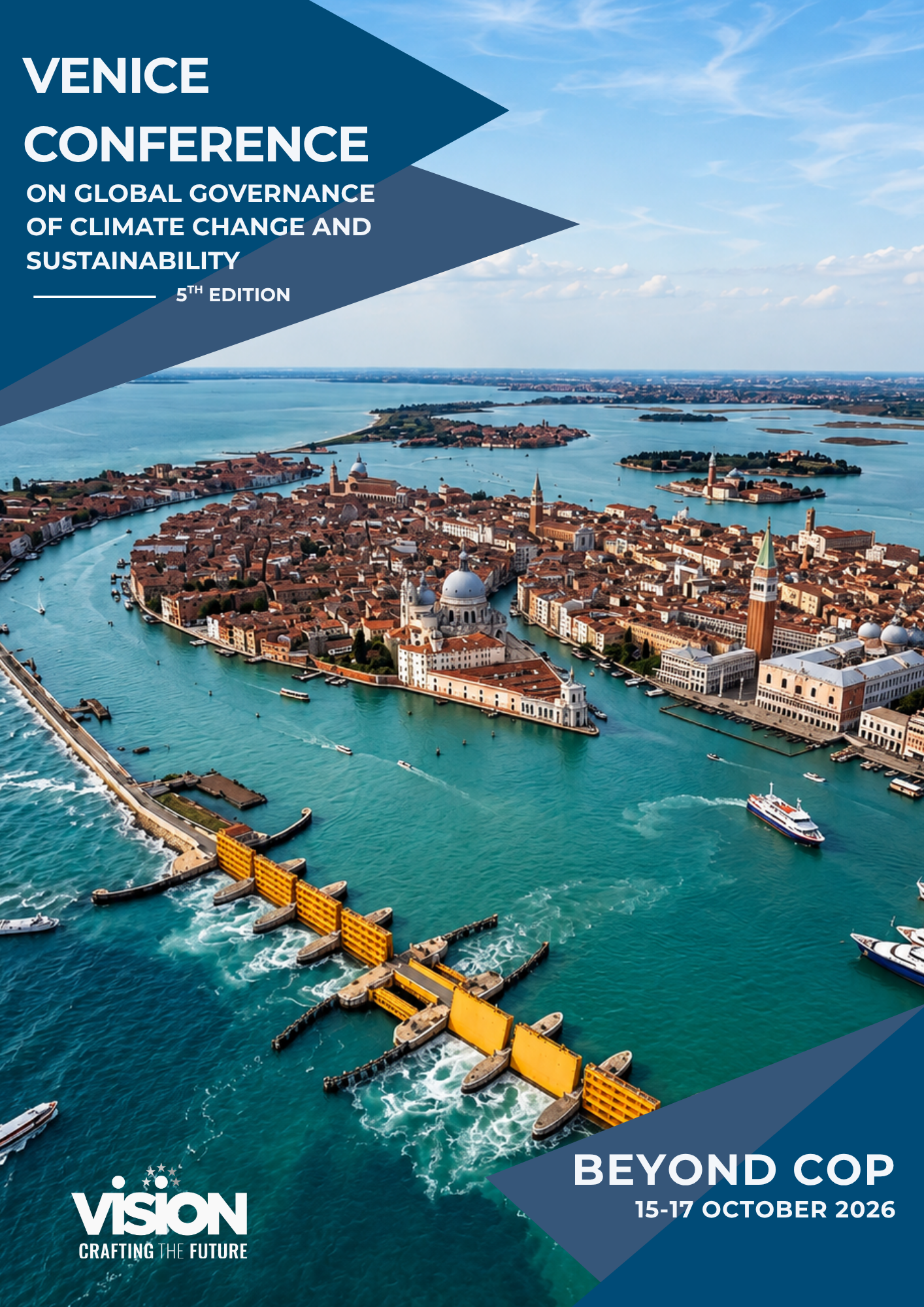
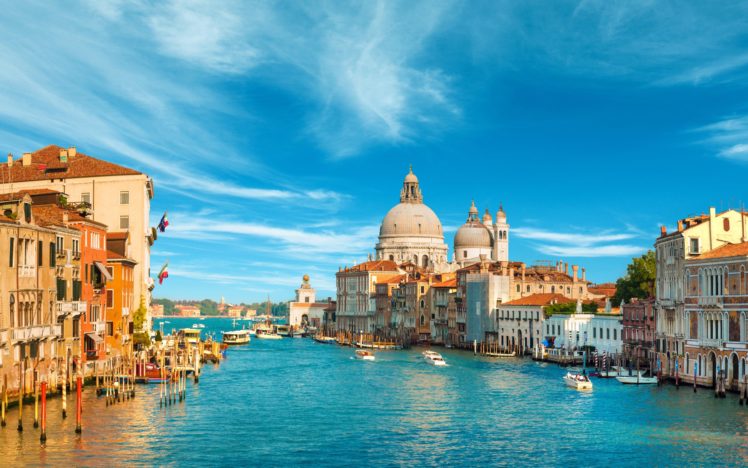
This is the framework of the Fifth Edition of the Venice (former Dolomite) Conference on the Global Governance of Climate Change and Sustainability. This will take place on October 15–17, 2026, at the iconic Isola di San Servolo. The choice of Venice is no coincidence. As a city on the frontline of climate change, it represents both the urgency of the challenge and the need for innovative, global solutions. Venice stands as the "global capital" where climate change strategies are drafted, considering the political, managerial, communication, and intellectual challenges of the 21st century .
Amongst the proposals from the past editions, there are:
- A frame that will make the “loss and damage” facility more politically acceptable and, thus, more likely to reach the “places” that have already suffered or are about to suffer from climate change
- A toolkit to simplify and make more effective the methods through which the COPs and the UN are establishing the goals (and the targets) that countries negotiate
- Three ideas on how to kick-start a pragmatic debate on how to reform COP (which is something that many consider as impossible as the old chimera to reform the UN)
- A simulation of the impact of the decision taken at COPs
- A proposal to promote a market of independent evaluators of the sustainability of companies, paid directly by consumers/ investors/ citizens
THE AGENDA
The Venice Conference unfolds over three days:
Day I – Thursday, 15 October
Three Problem-Solving Groups (PSSGs) will explore and present solutions to fundamental trade-offs at the heart of transforming systems:
The mobility of the future – A business case for the eternal city – How to integrate the Tiber into Rome's public transportation
Rebuilding Venice - Housing, climate adaptation and practical urban retrofitting - A plan
Beyond differentiation: the robotized selector and the future of waste
Each group will begin its work in advance through dedicated preparatory webinars.
Day II – Friday, 16 October
Businesses, enterprises, think tanks and policymakers from all around the world will debate several key issues in the field of sustainability, among which:
Insurance at a strategic crossroad: climate unpredictability, new products and artificial intelligence as a trigger of personalized risk management (in partnership with AXA)
Materials as a competitive frontier: how co innovation and advanxced polymers are reshaping fashion, packaging and industry (in partnership with Venisia)
Small modular reactors (SMRs) at the edge of the energy transition: reliable low-carbon power, industrial competitiveness and the test of technological credibility
Beyond the horizon - offshore wind and the next chapter of global electrification
The paradox of agrifood: from compliance to regeneration - corporate strategies for climate resilient supply chains.
Moreover, three other PSSGs will explore and present solutions to fundamental trade-offs related to global climate governance:
Reforming COP
Managing geo-engineering: risk, responsibility and global oversight
Developing renewables in Africa: grids, finance and distributed solutions (focus on solar)
Day III – Saturday, 17 October
The draft of the Venice Manifesto will be discussed, finalised, and presented to the media. Follow-up thematic events will take place in the months thereafter to sustain momentum and implementation.
The Conference is designed not as a one-off event, but as a catalyst for long-term platform for problem-solving.
THE PARTNERS
Vision convenes the 5th Edition of the Venice Conference thanks to several partnership with important national and international institutions and actors.
Among the scientific partners, there are important academic and research institutions, including Università Bocconi, Politecnico di Milano, and LUISS, as well as the Venice-based universities: Istituto Universitario di Architettura di Venezia (IUAV), Venice International University (VIU), and Università Ca' Foscari.
The founding partner of the Dolomite Conference is AXA.
The Media partners are: The Conversation, the global media agency that acts as a link between the best universities and the general public, illuminem, the global platform focused on sustainability and business, GEDI, one of the major Italian media groups with La Repubblica and La Stampa, RAI, the national public broadcaster, which will convey some of the contents.
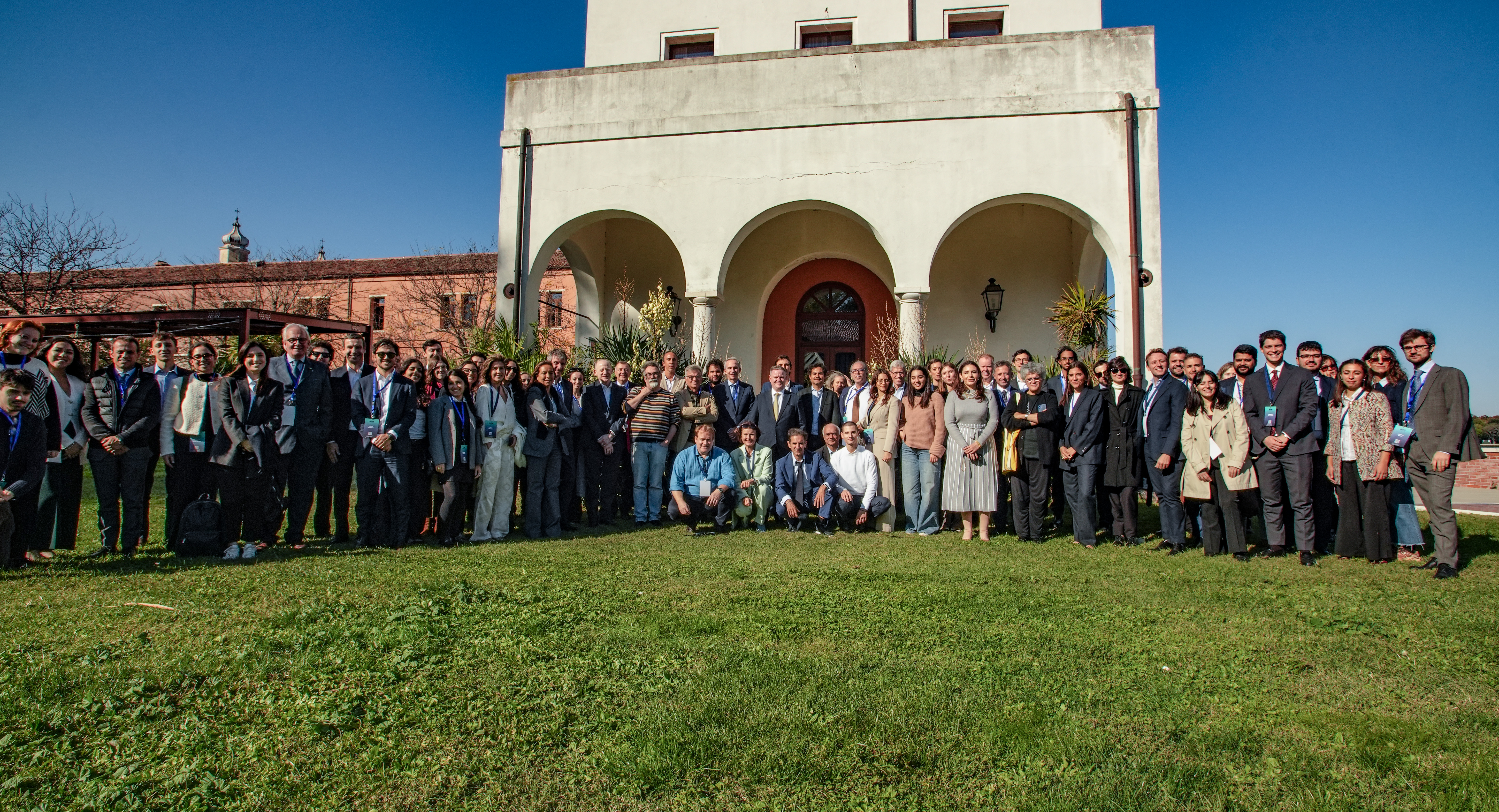
About 100 people will participate at the Conference. They come from all around the world.