
The appointment of change.
The author of the paper is Marina Obba
These past weeks, media attention has concentrated on the Democratic Republic of Congo especially after the death of Luca Attanasio, the former Italian ambassador to the country, was confirmed on Tuesday the 22nd February.
An unresolved conflict
Luca Attanasio was on a UN convoy accompanied by an Italian military official driven by a Congolese national. They were on the road to a location where the World Food Program had been delivering food. As the path had been declared safe they were not accompanied by the regular Congolese or UN military forces. However, the ongoing tension and distress in the region surprised once more, in what has been believed to be, an attempt to kidnap the Italian diplomat. In fact, according to Human Rights Watch, the business of kidnapping has become really profitable and widespread in the area.
Inevitably, this unfortunate event has reignited the hitherto buried and charged debate on the effectiveness on the political stability and security in DR Congo of the presence of the UN Stabilization Mission, MONUSCO.Two decades have now gone by from its establishment in 1999 and a decade has passed from the inauguration of what was aimed to be a new phase in the conflict. However, despite the countless resources made available to improve the situation, relatively new violence-mapping initiatives such as Kivu Security Tracker, reveal a rather pessimistic scene. In this regard, many have raised concerns on the possibility that these very UN-led initiatives, would have contributed to the armament, immunity and impunity of militants rather to justice. Such would be the case of the 2002 Peace Accords whereby a the incorporation of armed group members to the national military would have only provided with training to those aiming to fight.
The violent crisis in Eastern Congo has overshadowed other significant events which must not be overlooked. Indeed, February has brought some light in DR Congo, a light that could shine not only the Great Lakes but on the whole continent.
The takeover of DRC's President Felix Tshisekedi, from South Africa’s Cyril Ramaphosa, as the new chair for the African Union, for a one year term has been a cutting-edge one. The first time, since the African Union’s inauguration that a Congolese president leads the African needs.
A new frontier
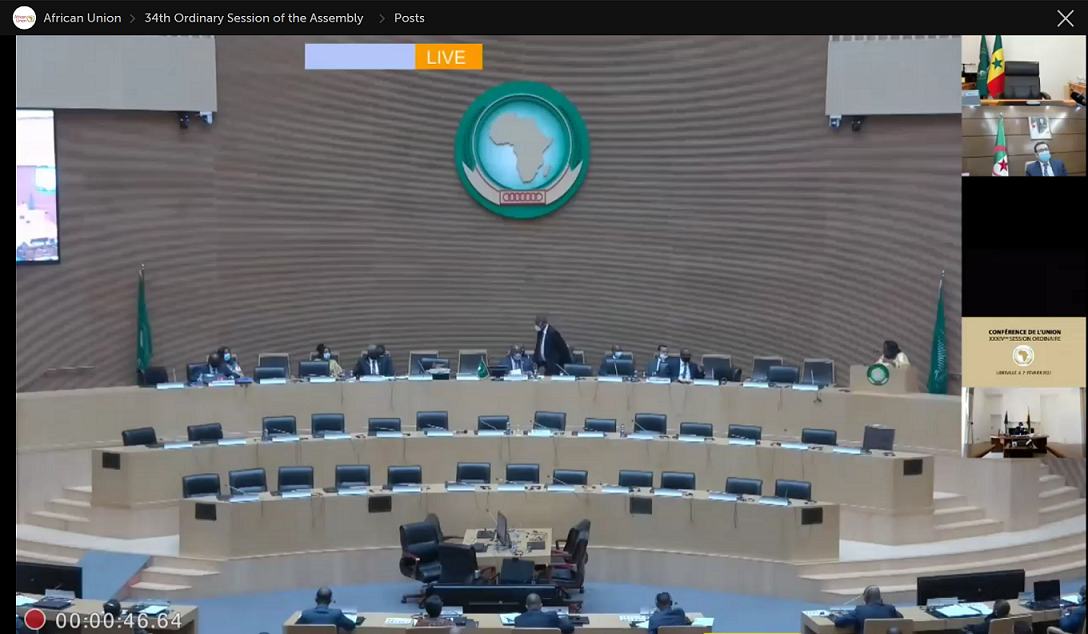
For two full days, at the beginning of this month, the African heads of state and government were convened in the African Union summit. Although this time, given the ongoing health crisis, in the form of a virtual gathering. Tshisekedi set an ambitious agenda outlining unmistakeable priorities including ‘silencing the guns’ - already in Ramaphosa’s agenda and title name for the 2020 AU Agenda- addressing climate change, promoting integration, working for peace, fostering gender equality, advancing afCFTA promoting African culture - and last, fighting the COVID-19 pandemic, ensuring the supply of vaccines.
Interestingly, the summit took place exactly one year after the first case was recorded in the continent, in Egypt, in 2020, the 6th of February. Nevertheless, and to the continent’s favour, what the international community feared would materialize into a disaster, has not done so.
However, what has materialized has been the injustice through which the vaccines are being delivered. What the World Trade Organization’s novel chief, Ngozi Okonjo-Iweala denounced as “vaccine nationalism” can prove to be a unique opportunity for cooperation within the African Union to coordinate a program for a fair and efficient share of vaccines.
Many might be worried that the leadership of the organization is now in the hands of a leader who has to confront at the same time, the resilient problems from an endemic domestic instability. Nonetheless, the appointment of Tsishekedi could also be the turning point for a new AU that does not only attend to the regional individual powers’ needs but to the wellbeing of the African states as a whole. The coming weeks, where the distribution of vaccines will begin, will be crucial to abide by the principles that the DRC President underscored early this month.