The results and the Pontignano Manifesto
I believe we Europeans feel far too safe. Europe’s political and economic leadership in the world, which was still unchallenged at the beginning of the century, has long since ceased to exist. Will the dominant cultural influence of Europe be maintained? I think not, unless we defend it and adjust ourselves to new conditions; history has shown that civilisations are all too perishable.
Like the other two founding fathers of the European Union - Schuman and De Gasperi - Konrad Adenauer lived through dramatically different historical eras. Born at a time when Chancellor von Bismarck was leading one of the European empires whose reach extended from America to China, he witnessed as a young man the horrors of two world wars that devastated European society and shattered its global power. In 1956, just one year before the treaty that launched what would become the most successful political project of the 20th century, Adenauer spoke words that remain deeply relevant today.
His reflection continues to resonate: we can survive only if we all “take part (as The Economist would say) in a severe contest between intelligence, which presses forward, and an unworthy, timid ignorance obstructing our progress,” risking the loss of the very lifestyle that has defined Europe.
This was the spirit from which the Conference on the Europe of the Future drew its strength. It was not just a conference, but an endeavour—an initiative aimed at engaging policymakers, intellectuals, journalists, and entrepreneurs in a shared problem-solving exercise that could contribute to shaping the answers we so urgently need. It stood as a call to everyone to take a reasonable risk, to invest once more in the future: our future and that of younger generations.
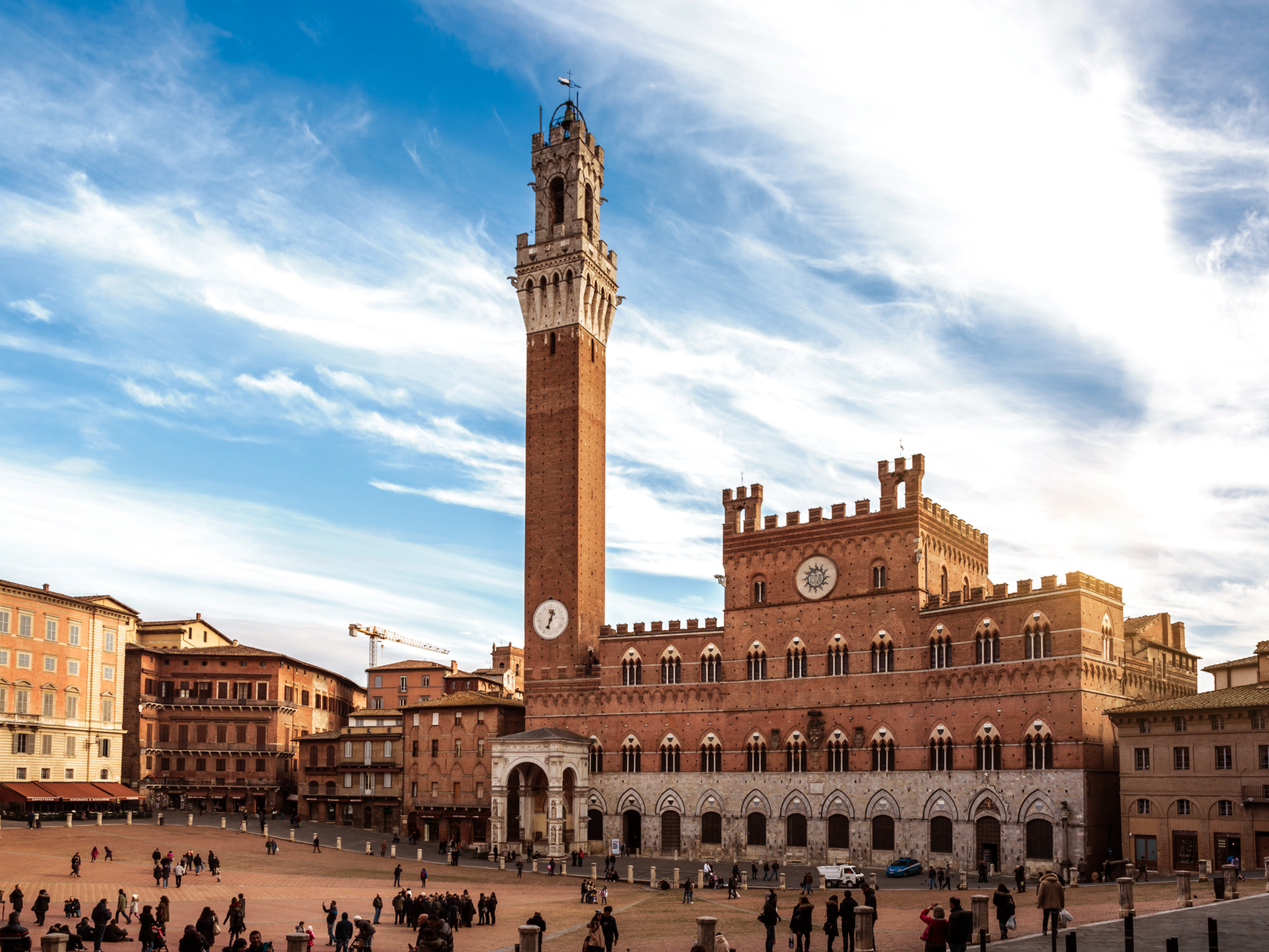
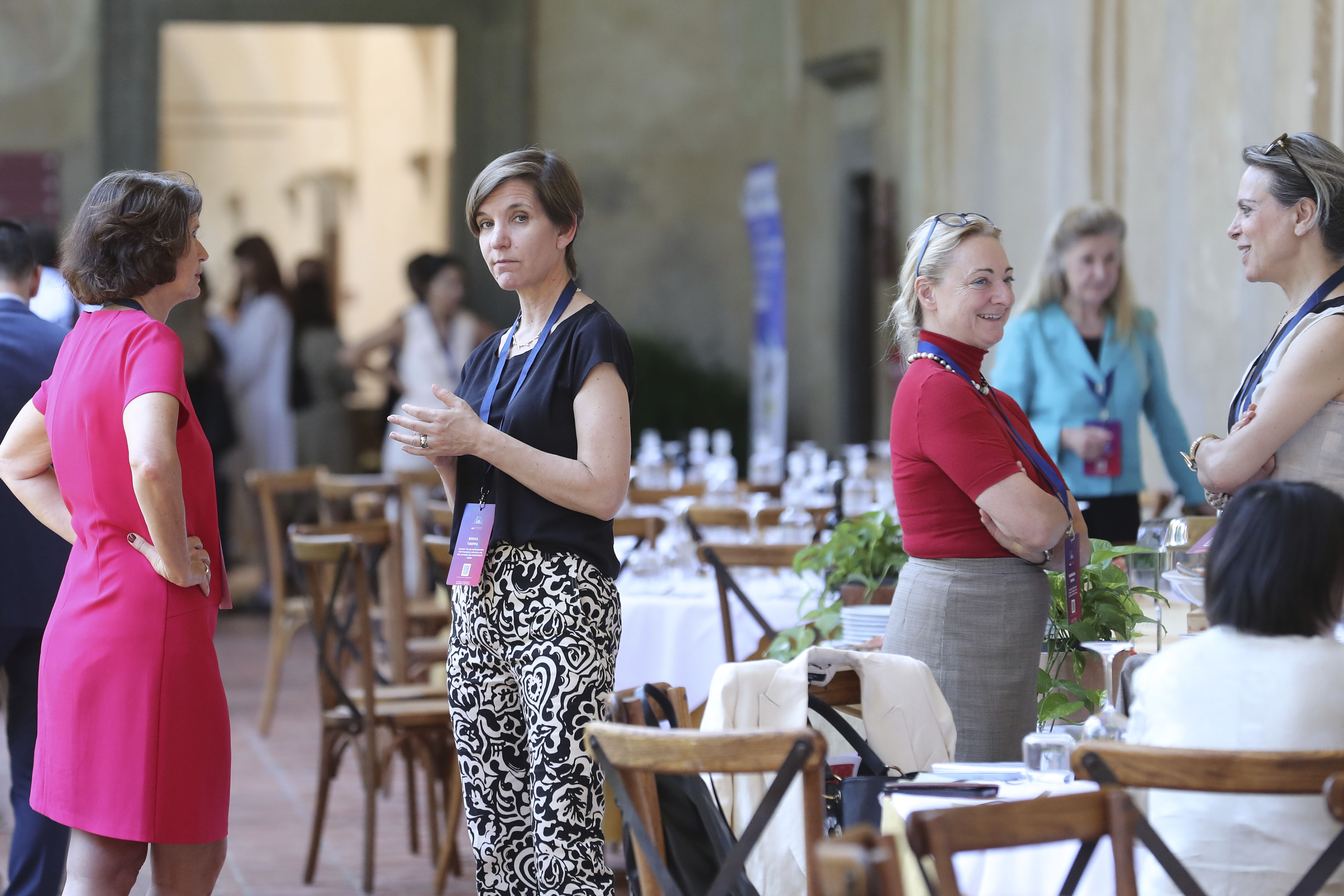
The conference brought together universities, media organizations, companies, and institutions that continue to consider Europe as a major priority. It functioned as a multipartisan, interdisciplinary platform, energized by the enthusiasm of students and the wisdom of leading European thinkers and decision-makers. It took place in Siena, one of Europe’s most beautiful medieval cities, and one of those rare places where the idea of Europe was first imagined and visually expressed, in the extraordinary frescoes of the Palazzo del Buon Governo.
THE OBJECTIVES AND THE PONTIGNANO MANIFESTO
The Pontignano Manifesto had the bold objective of providing input on seven key issues. These leveraged the contributions of various institutions—universities, political foundations, and think tanks—while the conference participants acted as valuable sounding boards and ideas contributors. The seven questions that were addressed included:
How could Europe smartly defend itself, avoiding being trapped in difficult choices between defence and welfare?
How could green policies be transformed into a strategy for building competitive advantages?
How could Europe foster its own AI/digital champions while using technology to create value for everyone?
What kind of EU budget was necessary to meet current challenges, both in terms of policy mix and reforms?
How could Europe turn chaotic trade wars into an opportunity to lead the long-awaited reform of the world trade order, together with other macro-regions such as China, India, South America, Africa, and the US?
What positive actions were needed to reform EU democracy and citizenship to make further integration politically feasible?
What decision-making processes were necessary for Europe to decide more effectively and swiftly, with or without treaty changes?
Press here to see the AGENDA

THE PARTICIPANTS AND THE PARTNERS
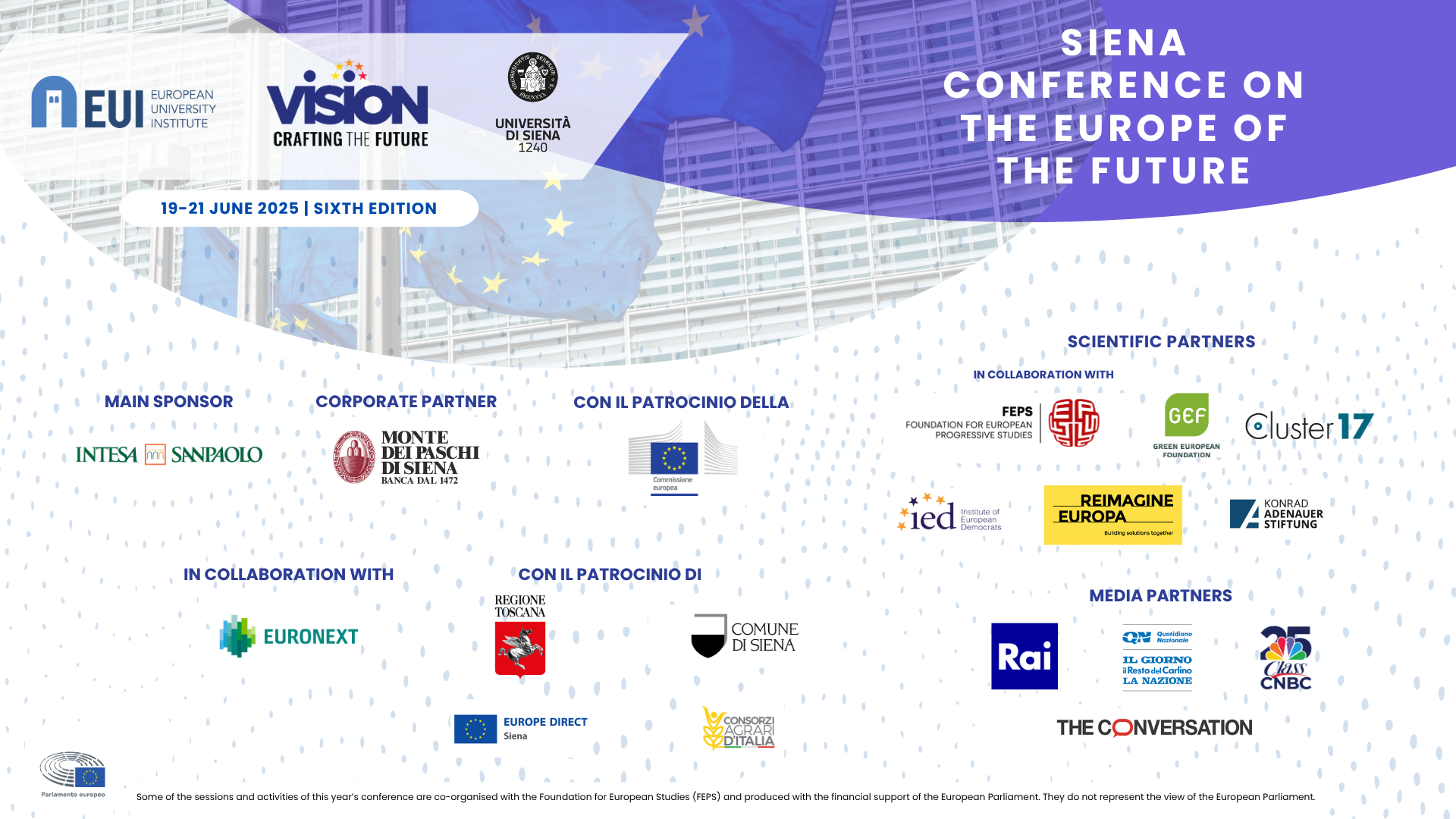
The sixth edition of the Siena Conference aimed to consolidate a platform for new ideas in a multipartisan environment. All five political foundations representing the largest European political have been partners of the project. The sixth edition could leveraged on the collaboration of the Foundation of European Progressive Studies; the Konrad Adenauer Stiftung; the Green European Foundation; and the Institute of European Democrats and the interest of the Patriots. The project puts together policy makers, media, academics, and business willing to join the platform.
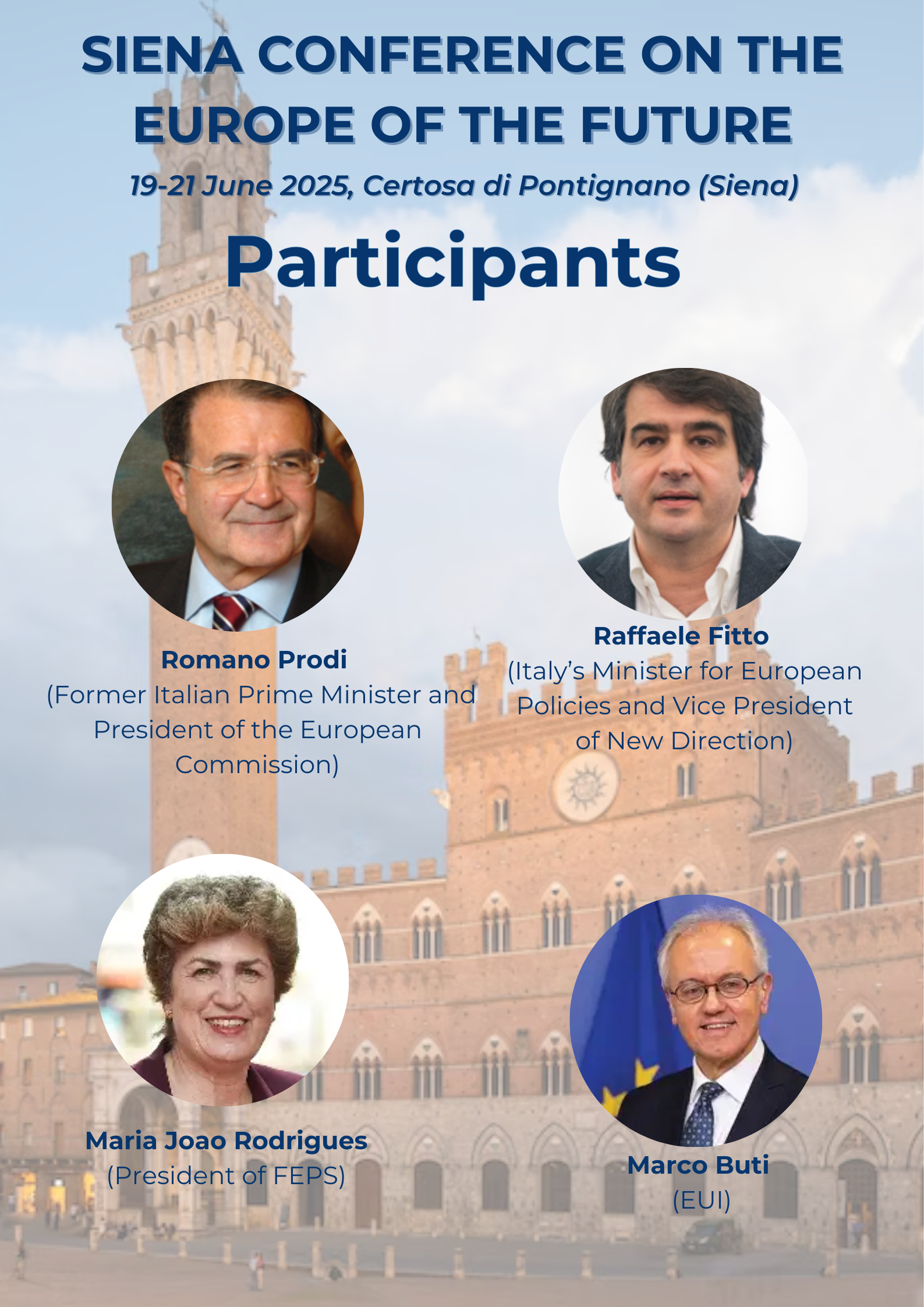
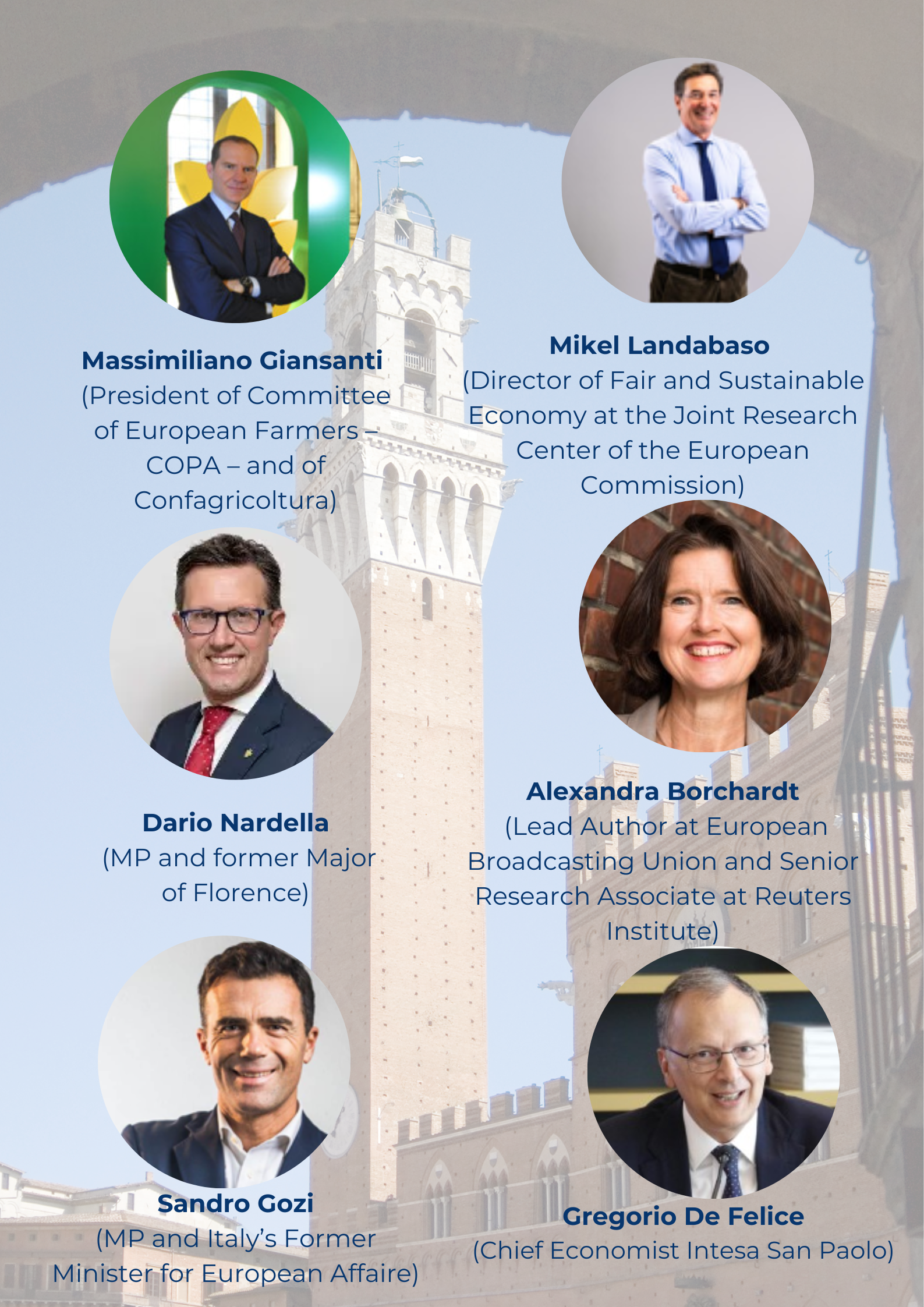
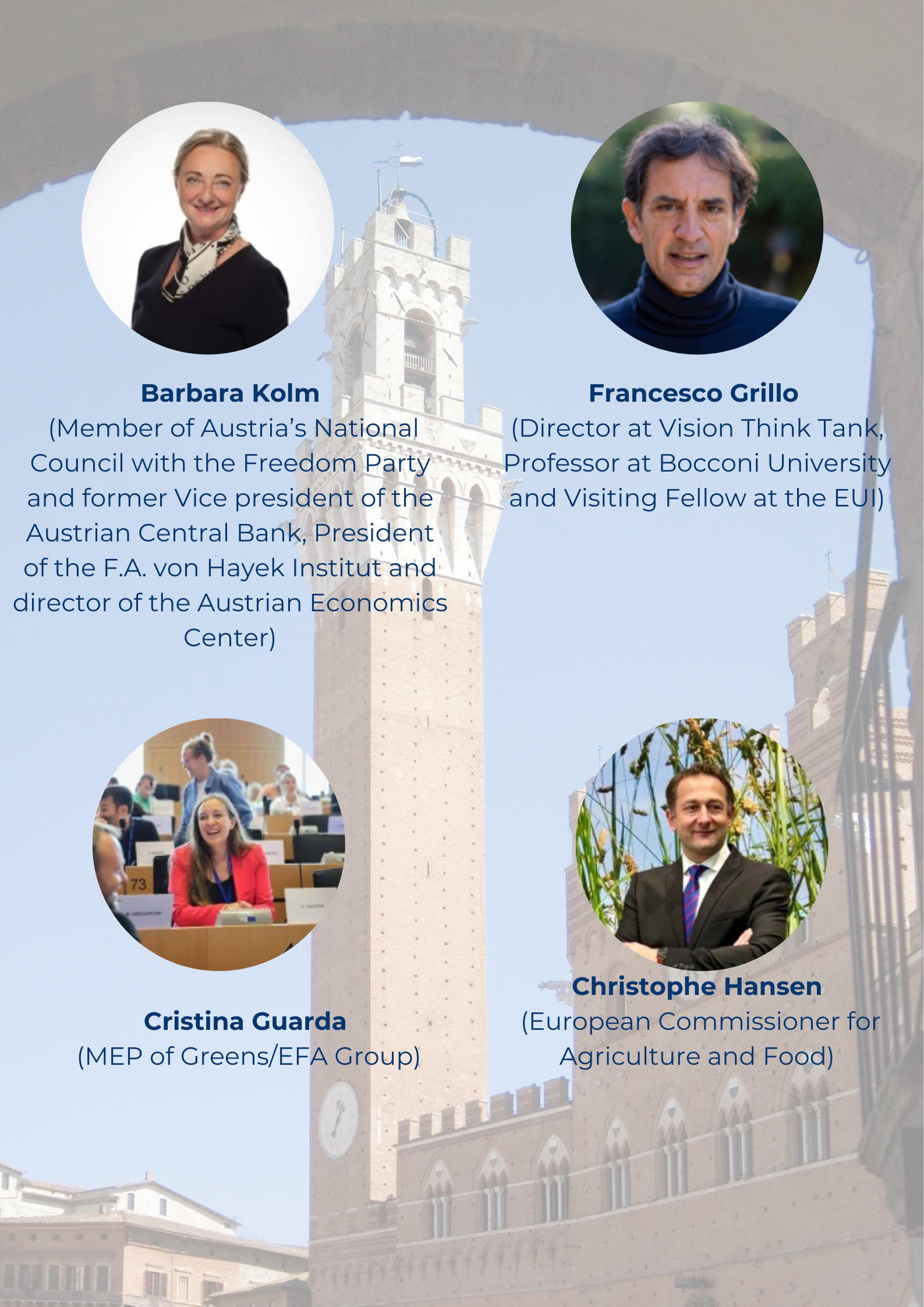
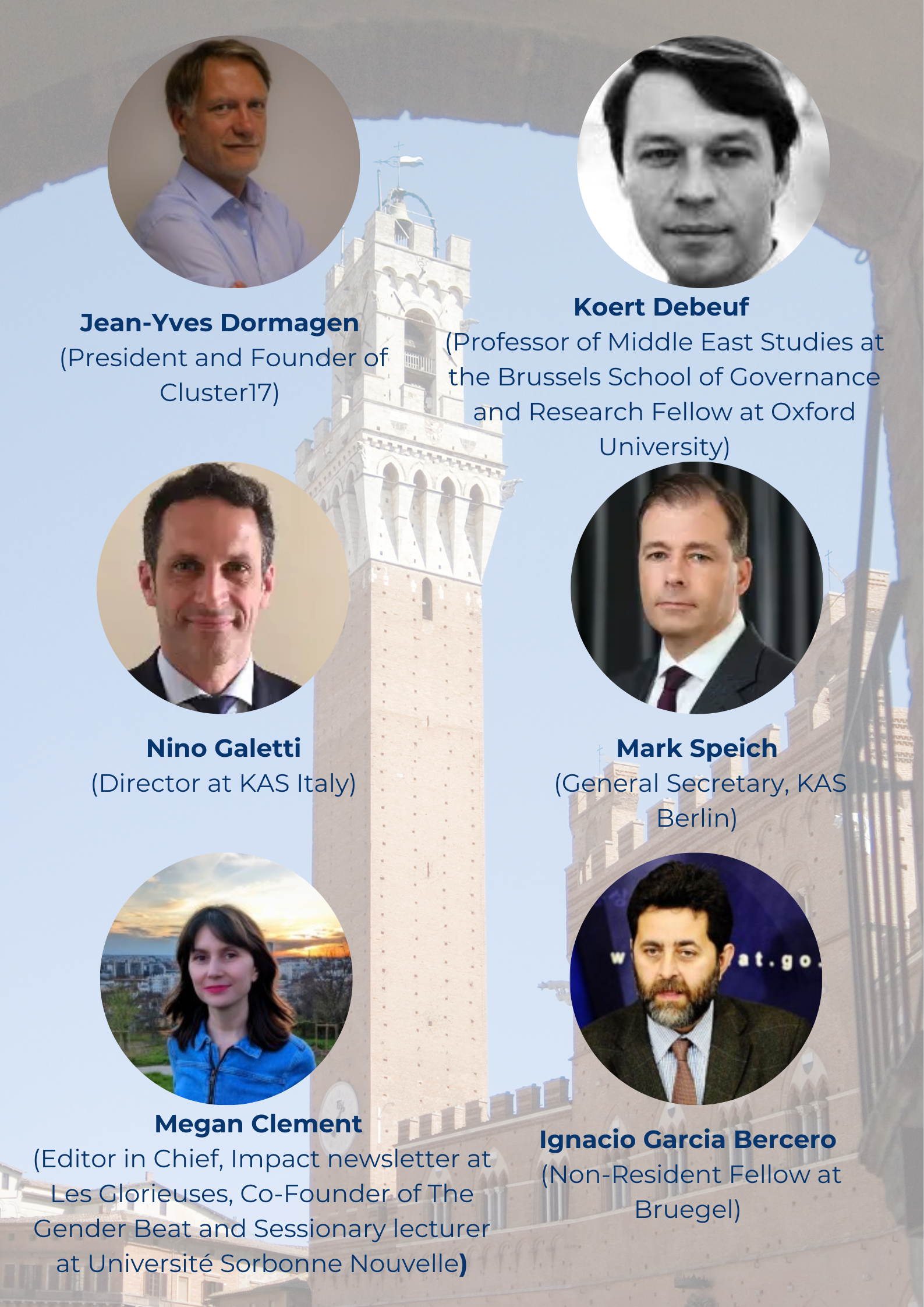
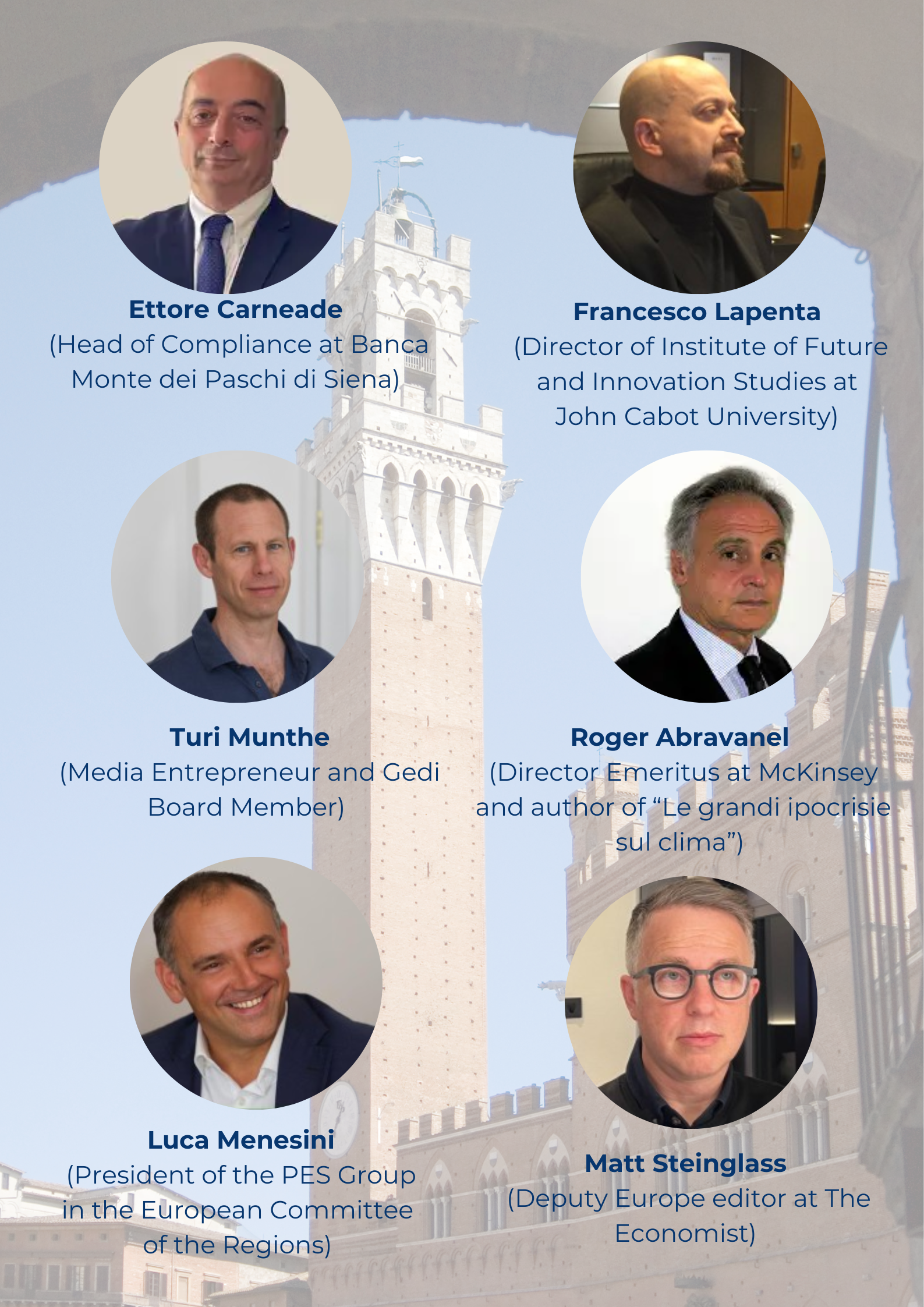
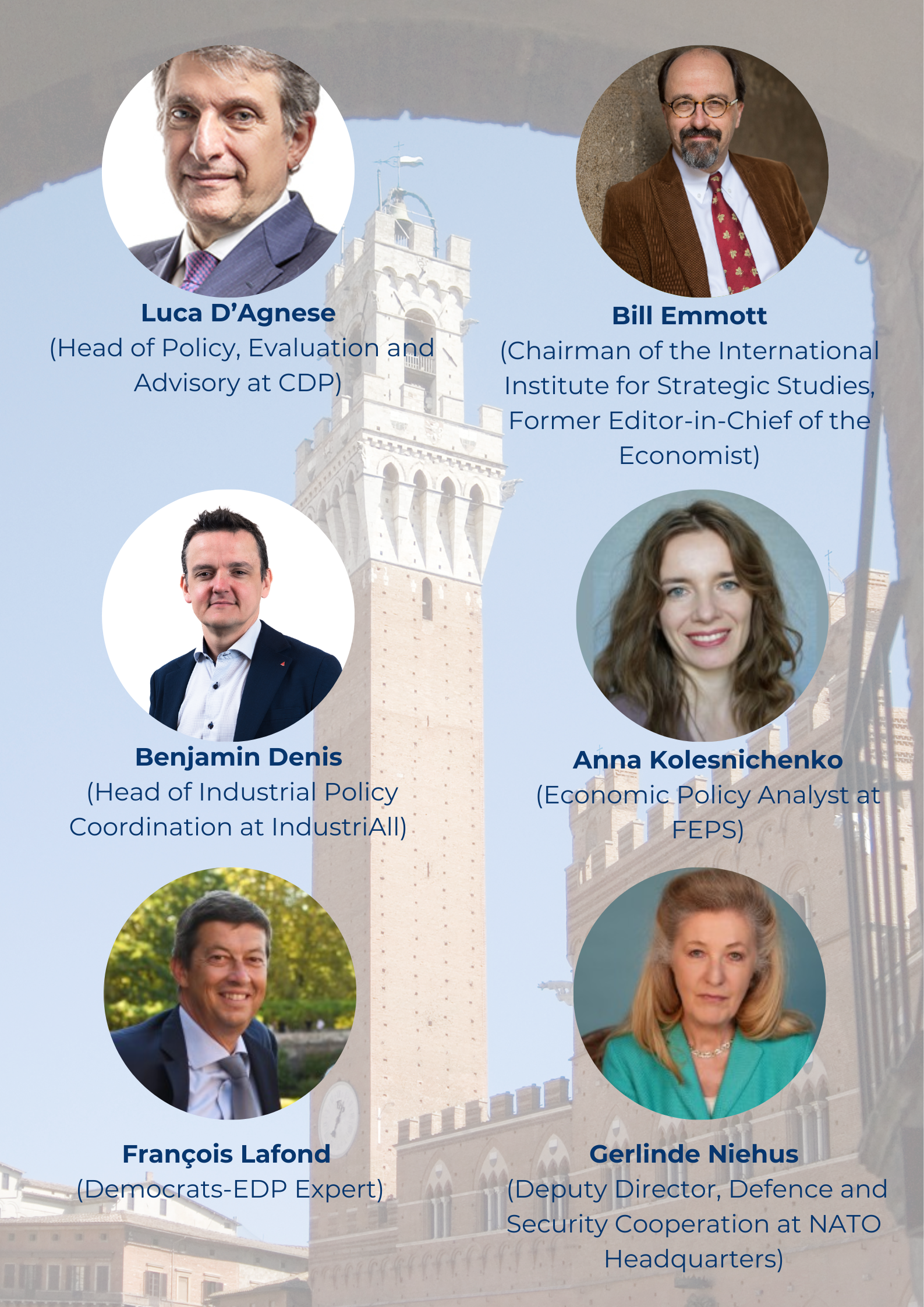
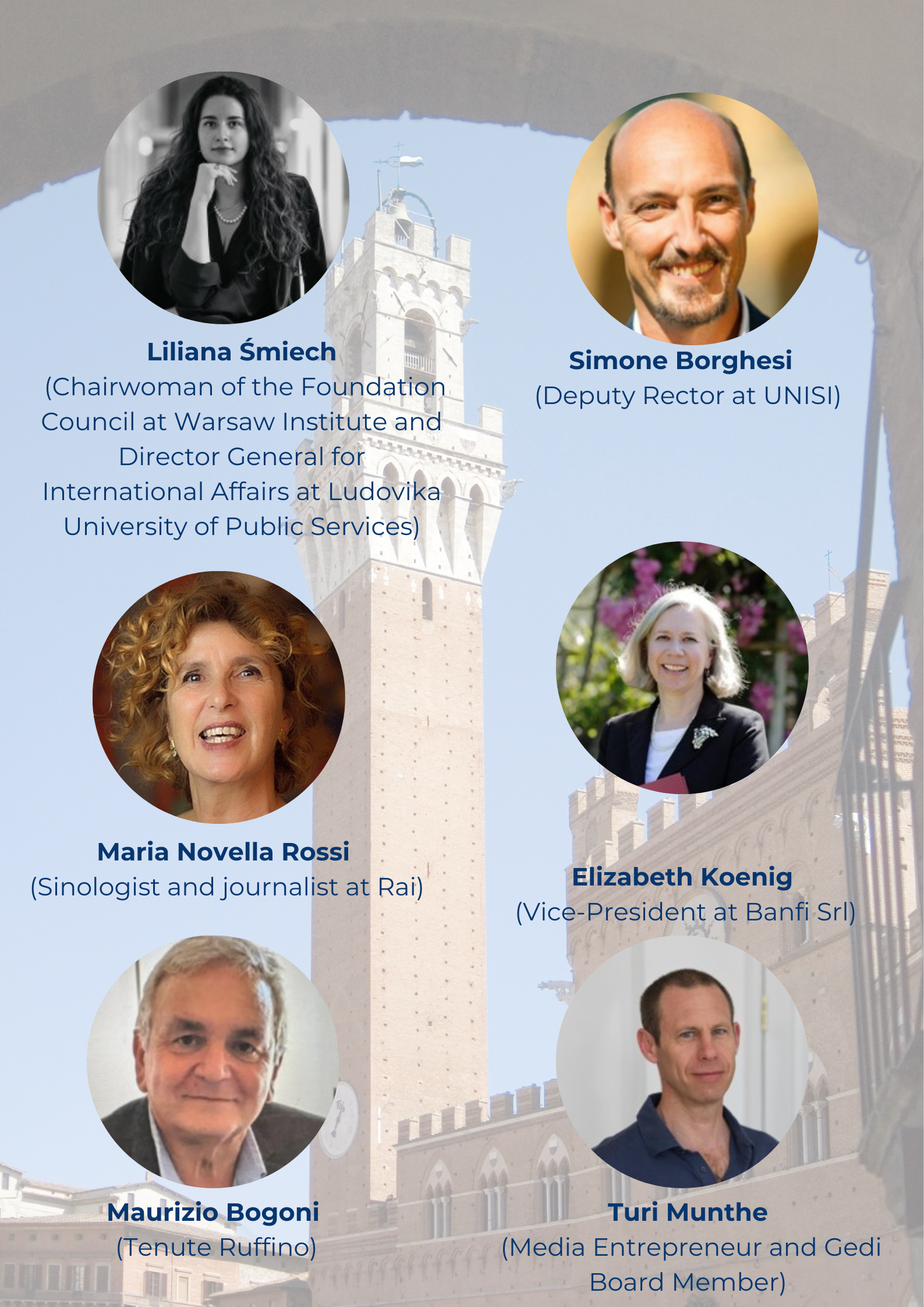
Among policy makers we had Romano Prodi, former President of the European Commission and former Prime Minister of Italy; Raffaele Fitto, Executive Vice-President of the European Commission; Maria João Rodrigues, President of FEPS; Mark Speich, General Secretary of KAS Berlin and former Minister of European Affairs and Policy at Land NRW; Barbara Kolm, Member of Austria’s Parliament with the Freedom Party, Director of the Von Hayek Institute and Former Vice Governor of Bamk of Austria; Bill Emmott, International Institute for Strategic Studies; Sandro Gozi, President of EDP and IED. Luca Menesini, President of the Party of the European Socialist Group in the Committee of the Regions; Matthias Barner, Coordinator of European Security at the Konrad Adenauer Stiftung in Berlin; Riikka Torppa, Head of Cabinet to the Commissioner for Financial Services; Paz Serra Portilla, Member of the Regional Parliament of Madrid (Verdes Equo); Mikel Landabaso, Director at the European Commission’s Joint Research Centre in Seville; Elisabeth Werner, Director General of DG AGRI; Eugenio Giani (Governor of Regione Toscana); Vanna Giunti (Assessor of Tourism for Siena); Dario Nardella (Member of European Parliament);
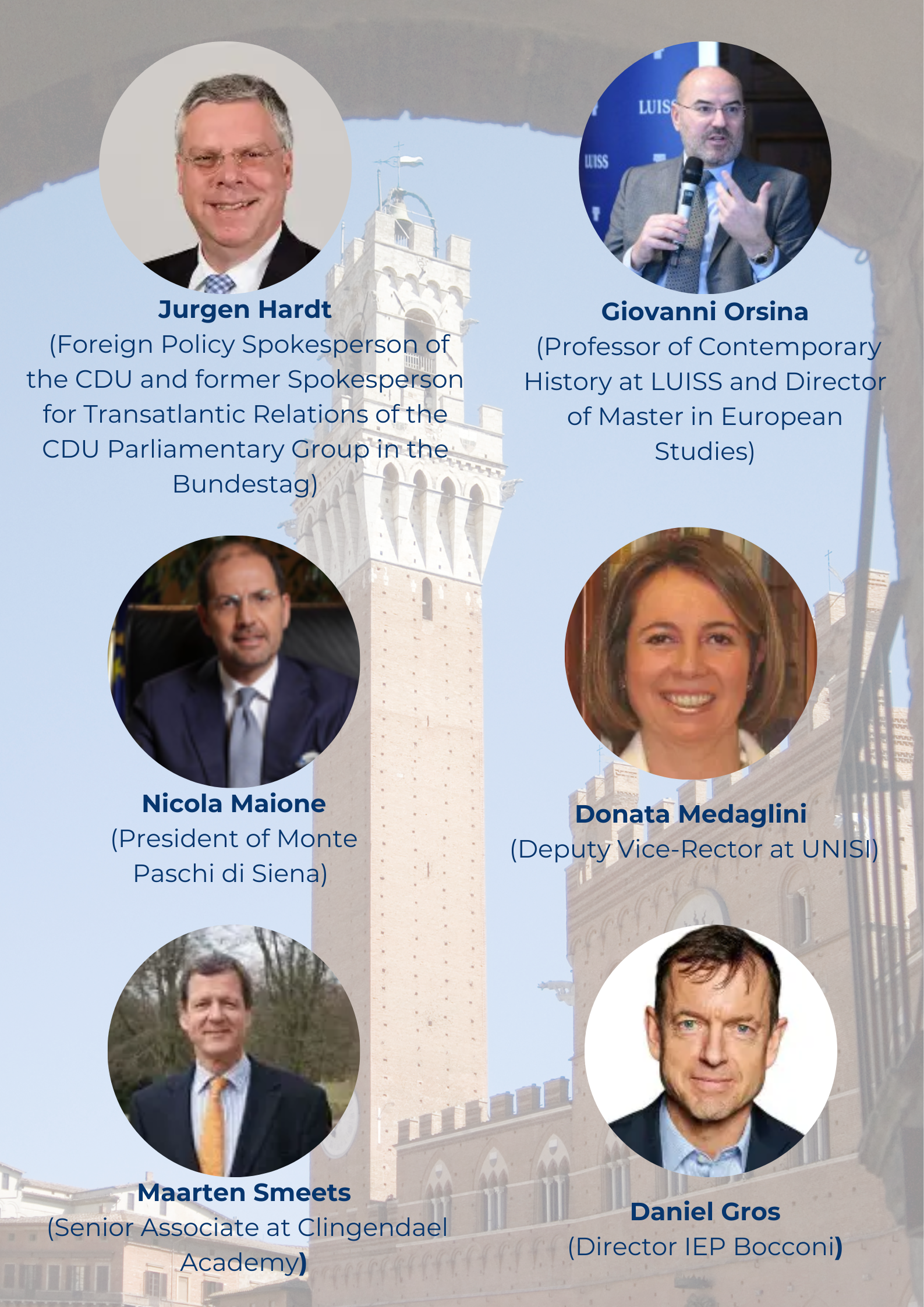
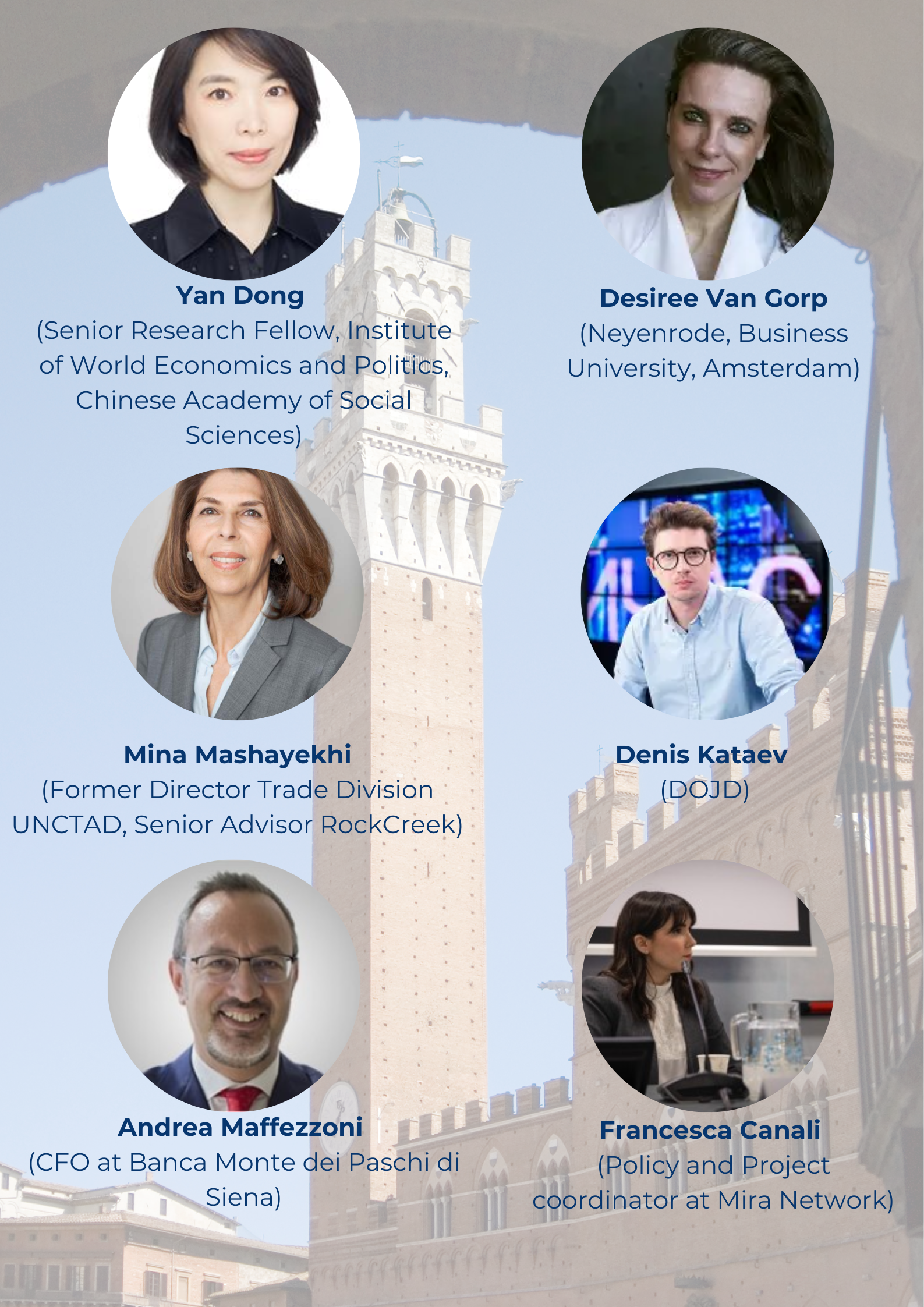
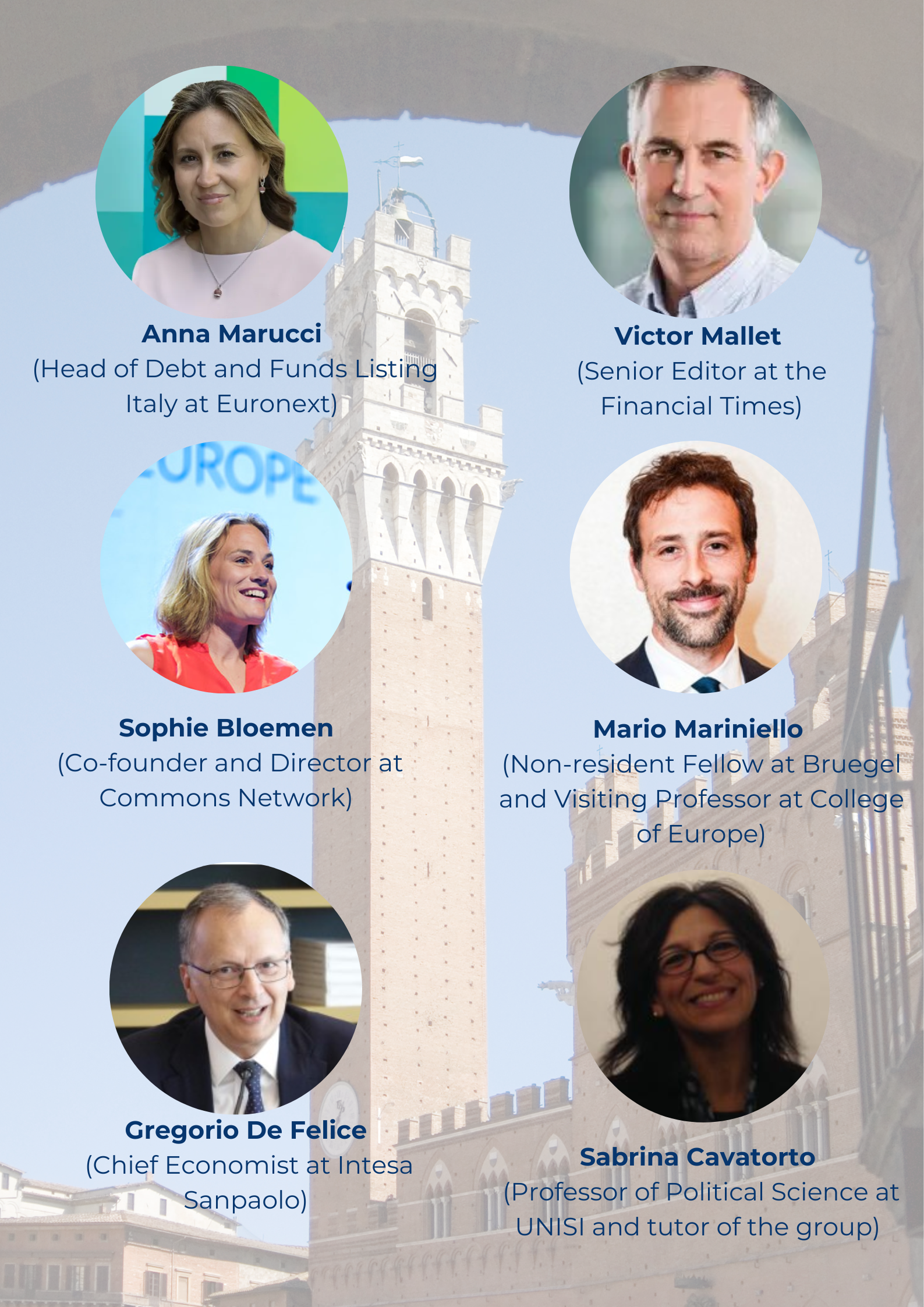
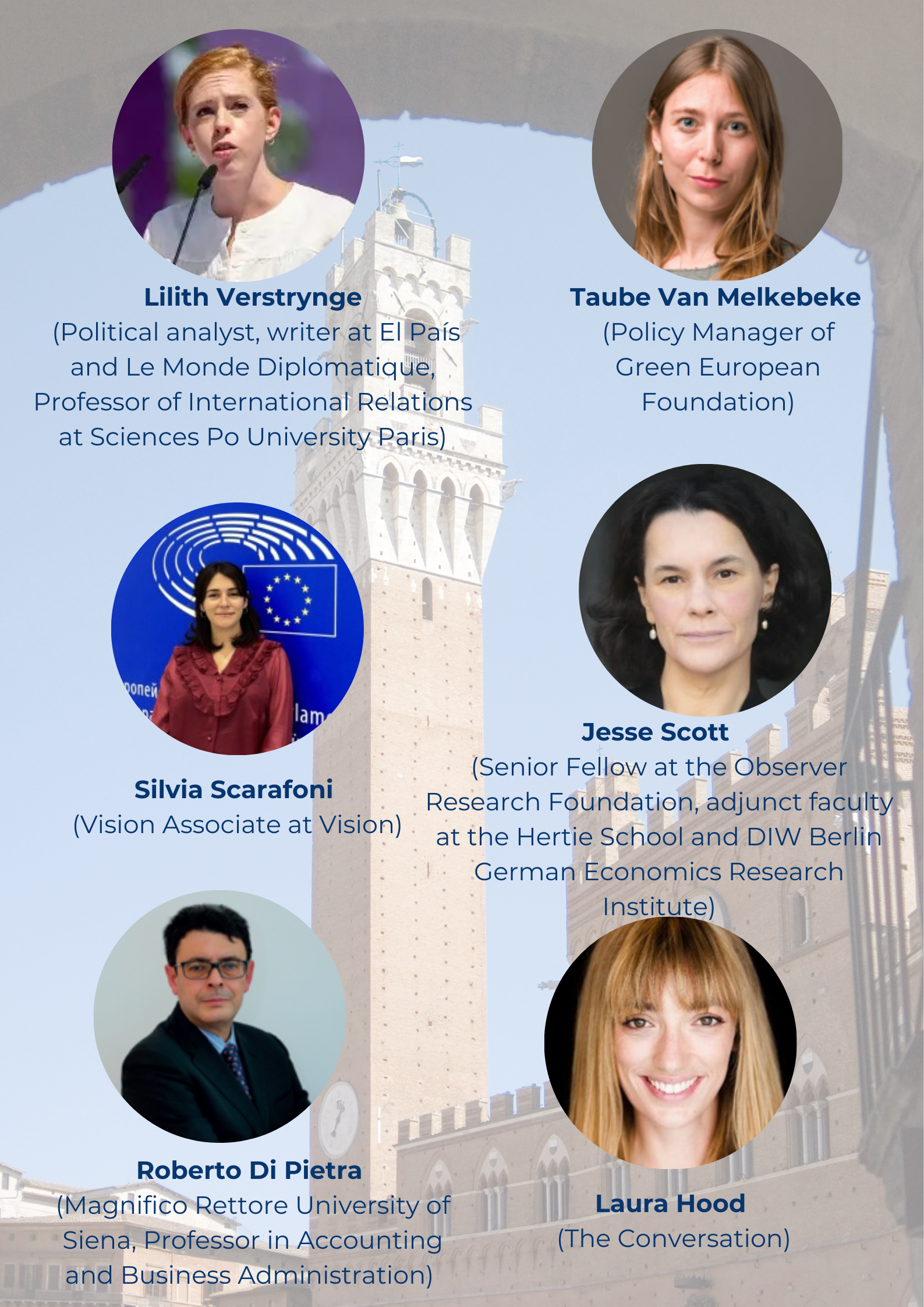
All main European media outlets will convey the Siena message and ideas. In Siena we had Victor Mallet Senior Editor, World News Desk of the Financial Times; Matt Steinglass, Deputy Editor Europe at The Economist; Katherine Butler, Associate Editor Europe at The Guardian); Lilith Verstrynge, former MP in Spain for Podemos and columnist for El Pais and Le Monde Diplomatique; Gemma Ware, Global Executive Editor of The Conversation Weekly podcast and head of audio for The Conversation UK; Laura Hood, Politics Editor and Assistant Editor at The Conversation UK; Turi Munthe, media entrepreneur and GEDI board member; Megan Clement, Editor-in-Chief of Impact at Les Glorieuses and sessional lecturer at Université Sorbonne Nouvelle; Denis Kataev, Russian journalist at the DOJD network; Agnese Pini, Editor of QN Group, La Nazione, Resto del Carlino; Maria Novella Rossi and Mariella Venditti, RAI; Alexandra Borchardt, Lead Author at the European Broadcasting Union and Senior Research Associate at the Reuters Institute.
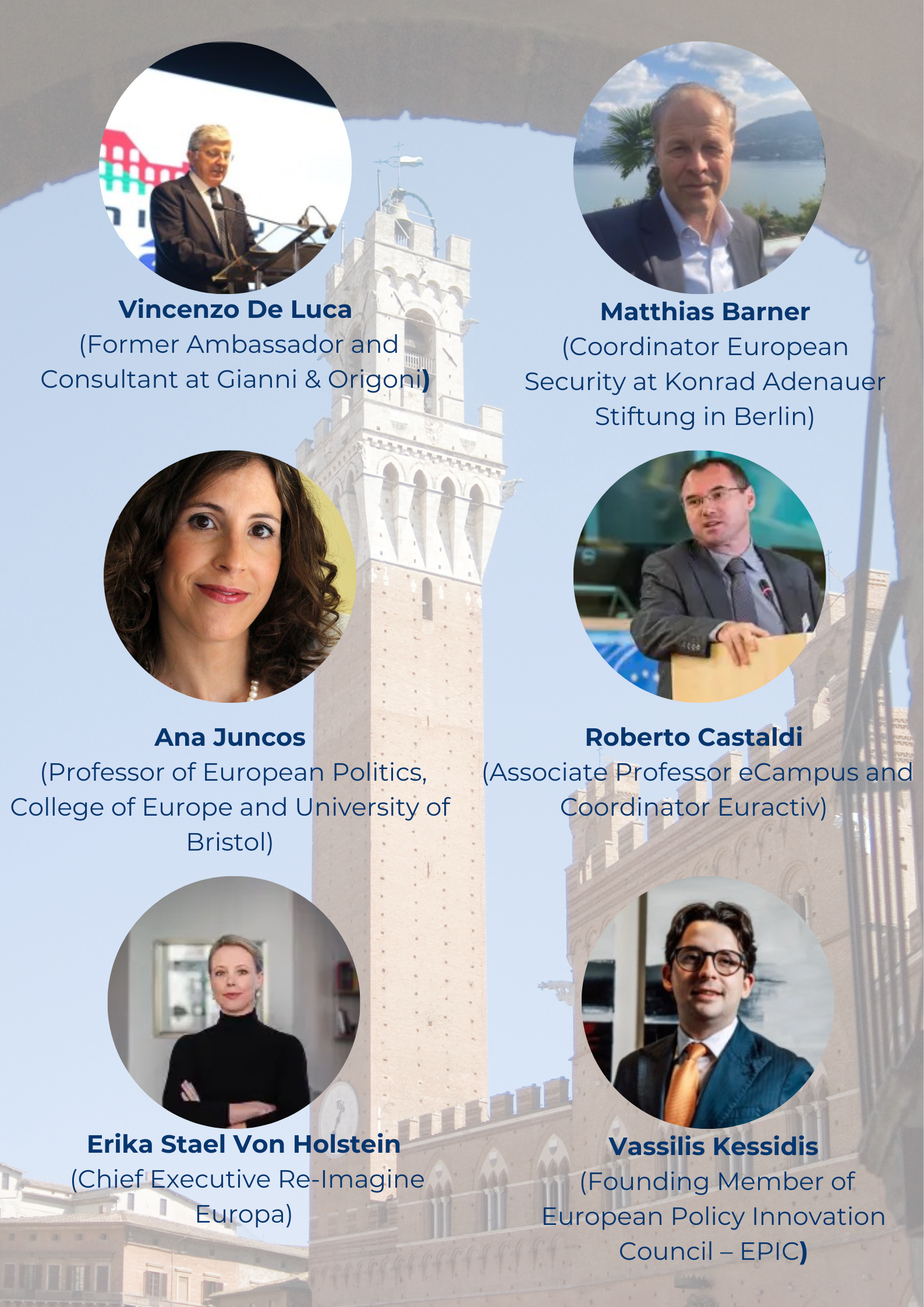
The conference engaged academics and think tankers with a strong interdisciplinary approach and motivation for having an impact Anna Kolesnichenko, Economic Policy Analyst at FEPS; Erika Stael Von Holstein, Chief Executive Re-Imagine Europe; Matthias Barner, Coordinator European Security at Konrad Adenauer Stiftung in Berlin; Nino Galetti, director of Konrad-Adenauer-Stiftung in Italy; Francesca Traldi, Scientific Advisor at the Konrad-Adenauer-Stiftung in Italy; Marco Buti, Padoa Schioppa Chair at EUI and Former Director General at ECFIN, European Commission; Kalypso Nicolaïdis, Professor at St Antony’s College, University of Oxford and the School of Transnational Governance, EUI; Jesse Scott, Senior Fellow at the Observer Research Foundation; Koert Debeuf, Professor of Middle East Studies at the Brussels School of Governance and Research Fellow at Oxford; and Liliana Śmiech, Chairwoman of the Foundation Council at the Warsaw Institute and Director General for International Affairs at Ludovika University; Giovanni Orsina, Professor of Contemporary History at Luiss and Director of the Master in European Studies;Roberto di Pietra (Siena University Rector); Donata Medaglini (Deputy Vice-Rector at UNISI); Simone Borghesi, Deputy Rector at UNISI; Sabrina Cavatorto, Professor of Political Science at UNISI and tutor of the group; Luca Verzichelli, Professor of Political Science at Università Siena; Ana Juncos of the College of Europe; and Sophie Bloemen, Co-founder and Director of Commons Network. Jean-Yves Dormagen, President and Founder of Cluster17; and Lenny Benbara, Associate Expert at Cluster17 Daniel Gros, Director of the Institute of European Policy Making at Bocconi University. And many students: Maarten Smeets, Senior Associate at Clingendael Academy and Non-Resident Fellow at the World Trade Institute; Ignacio Garcia Bercero and Mario Mariniello, both Non-Resident Fellows at Bruegel; Yan Dong, Director at the Institute of World Economics and Politics, Chinese Academy of Social Sciences; Desiree Van Gorp of Nyenrode Business University; Mina Mashayekhi, former Director of the Trade Division at UNCTAD and Senior Advisor at RockCreek; Nicolas Buchoud, Global Solutions Fellow; Attila Demkó, head of the Strategic Foresight Program; Gerlinde Niehus, Deputy Director of Defence and Security Cooperation at NATO.
Key part were the students and we thank for their enthusiasm: Odysseas Konstantinakos (PhD candidate, Departament of Political and Social Sciences at EUI) Julius Niewisch (Law Student at University of Potsdam), Kristina Botsianovska (Cultural Diplomacy Student at UNISI), Anoa Olivier (Public and Cultural Diplomacy Student at UNISI), Ilaria Menchetti (Public and Cultural Diplomacy Student at UNISI), Virginia Frigerio (Student at UNISI), Héloise Mathilde Marie Douek (Public and Cultural Diplomacy Student at UNISI), Chiara Grillo (Luiss and Nova); Alice Bubici, Bachelor’s student in International Sciences and European Institutions at the University of Milan; Mattia Gusmini, Master’s student in International and Diplomatic Affairs at the University of Bologna; Ymen Hdiguellou, Process Automation Expert altermAInd.

Corporate leaders are becoming a vital component of the problem solving with: Nicola Maione, President of Monte Paschi di Siena; Gregorio De Felice, Chief Economist at Intesa Sanpaolo; Andrea Maffezzoni, CFO of Monte dei Paschi di Siena; Marcella Panucci, Board Member at Monte dei Paschi di Siena; Ettore Carneade, Head of Compliance at Monte dei Paschi di Siena; Eleonora Faina, Director at Confindustria; Matteo Bassi, Head of Economic Policy & Regulation at Amazon; Anna Marucci, Head of Debt and Funds Listing Italy at Euronext; Massimiliano Giansanti, President of COPA and Confagricoltura; Deepak Bagla, CEO of Invest India, Roger Abravanel, Director Emeritus at McKinsey and author of “Le grandi ipocrisie sul clima”; Luca D’Agnese, Head of Policy, Evaluation and Advisory at Cassa Depositi e Prestiti; Jose D'Alessandro, Entrepreneur and consultant.
Our corporate partners – Intesa Sanpaolo and Banca Monte dei Paschi di Siena – have long understood the importance of maintaining an open, innovative, and solutions-oriented dialogue in shaping proposals. The conference also relied on engagement with Borsa Italiana and Euronext – the European stock market infrastructure – to connect with European and Italian listed companies and grow a community around this initiative. Our media partners were The Conversation, a global platform linking top universities and the general public; the MONRIF group, one of Italy’s major publishers (Quotidiano Nazionale, La Nazione, Il Resto del Carlino, Il Giorno); CNBC, an American business news television channel; and RAI, Italy’s national public broadcaster.

The sixth Siena Conference on the Europe of the Future was one of three flagship initiatives led by Think Tank Vision. Alongside it, Vision has continued developing its other major gatherings: the Dolomite/Venice Conference on “Global Governance of Climate Change,” previously organized with Bocconi University, Politecnico di Milano, the Institute for New Economic Thinking (New York), CEBRI (Rio), TERI (New Delhi), and the Blavatnik School of Government at Oxford University; and the upcoming conference on “Skills for the AI World,” co-hosted with the University of Southern California and The Conversation in Los Angeles.
This series of events seeks to establish a new kind of “Davos,” one focused on concrete and actionable solutions for navigating the complex, uncertain terrain of the coming decades.
Linked resources included the initial concept paper, preparatory work and webinars for the four “problem-setting/problem-solving groups,” participant profiles, the conference agenda, descriptions of the scientific, corporate, and media partners, and the methodology used in drafting the “PONTIGNANO PAPER.” Vision has outlined a strategy to present the paper’s seven proposals to European institutions and to engage the wider European public.
A special thank to the Chigiana Academy for opening to the conference the Palazzo Chigi Saracini and for the lecture concerto on Chopin’s Sonata n 3 from maestro Ian Jones