Between EU rules, NATO spending and the end of the PNRR, innovation is the answer

An article by Francesco Grillo for Il Messaggero
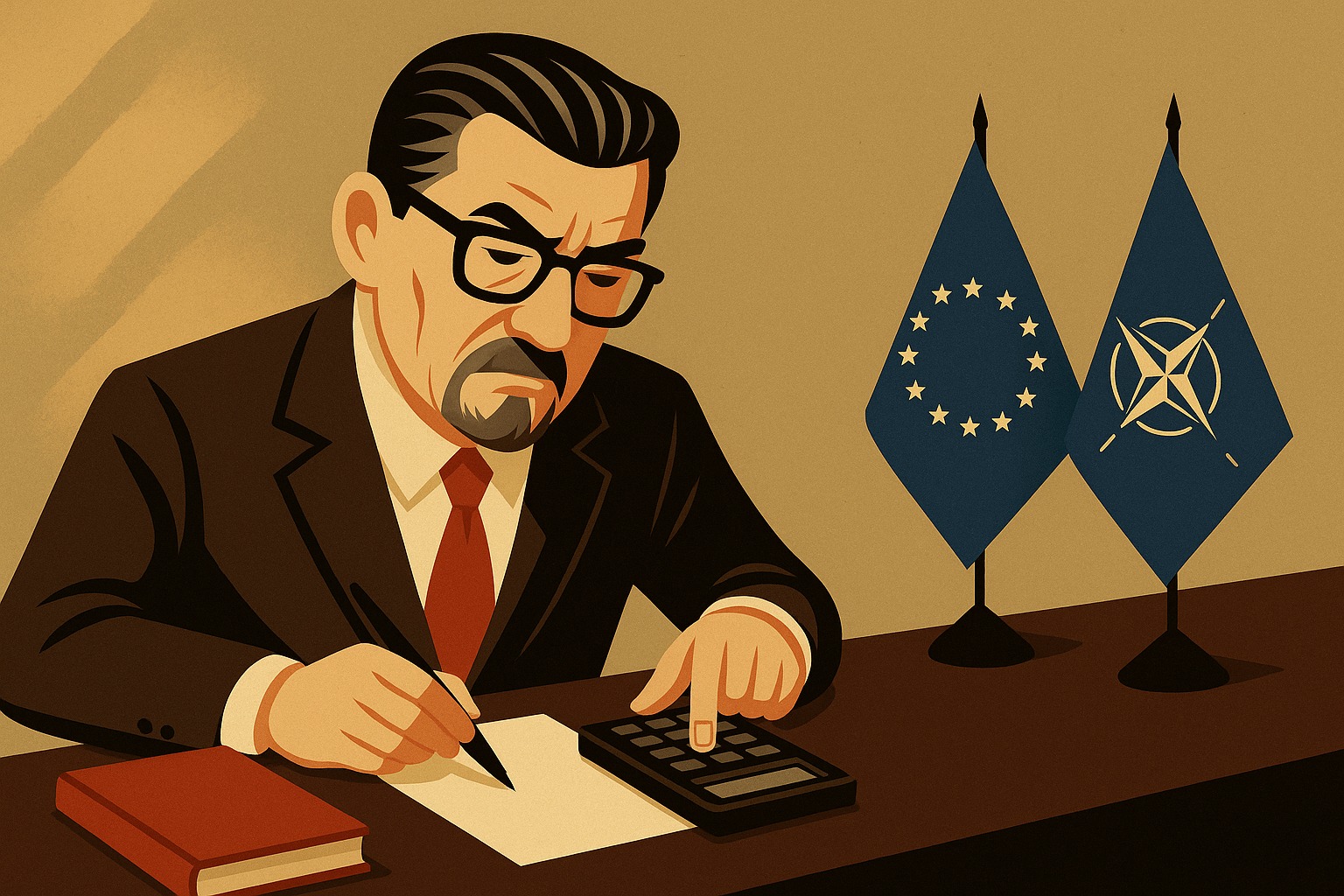
The Public Finance Programming Document outlines, with the frankness that is the hallmark of the Minister of Economy, the terms of the difficult equation the government will have to manage over the next three years. Indeed, it will be necessary to respond to three demands that seem to be in conflict with each other: reduce public spending by an additional 0.3% of GDP per year, as already agreed with the European Union; meet NATO commitments, which entail an increase in military spending of about 0.2% for each of the next three fiscal years; and, finally, achieve this without further eroding weak growth and the capacity to provide essential public services (starting with healthcare), in a context where the extraordinary support from the Recovery and Resilience Plan (PNRR), amounting to about 1% per year, will gradually disappear. The government must manage to do more with a shrinking fiscal lever. It is precisely this necessity that can finally give innovation a concrete meaning.
It is a very narrow path that Minister Giorgetti traces in the document preparing the draft budget law to be presented to Parliament in a few weeks. The economic growth forecast for the current year has been slightly revised downward (compared to the estimate made by the Ministry itself in April of this year) to 0.5%. This figure would have sparked political controversy some time ago, particularly because we continue to lag behind the Eurozone average (1.2%) and even Italy’s fragile pre-pandemic performance (from 2015–2019, Italy’s average growth was 1%). Nevertheless, stability provides some comfort; comparison with the difficulties faced by France and Germany is reassuring; and investors allocating part of their resources in the Euro area recognize a reliability superior to that of our partners. However, three clouds loom on the horizon for those trying to steer the Italian economy.
The first is the “structural plan to reduce public debt in the medium term”: we have promised the European Commission to reduce state spending by 0.3% of GDP each year. Given the limited room to maneuver on pensions (whose weight continues to grow relentlessly), the ministry’s document indicates that the areas subject to contraction are public sector wages and, even more so, public investments. Secondly, there is the NATO agreement: we will not suddenly move from the current 2% military spending to the 3.5% requested, but by 2028 we should already have reached 2.5%. However, if the additional spending went entirely to imports, we would accumulate more debt with no return. Finally, the PNRR: its impact (little discussed) has been less than promised in the document signed by Draghi in April 2021. However, according to the reports of the Chamber of Deputies, it has injected approximately €20 billion per year into the Italian economy over the past three years (1% of GDP), which will progressively disappear starting from June next year (the deadline for the PNRR). It is true that this scenario can be slightly softened by the reduction in the weight of the disastrous 110% superbonus from 2027 onwards; yet this good news may be offset by the negative effects of the trade war.
It is therefore problematic to understand how to prevent the modest growth expected over the next three years from being further reduced by these three constraints. If that were to happen, the denominators of the ratios dividing deficit and debt by GDP would shrink. Growth would worsen, as would the “stability” currently rewarded by rating agencies. The only possible answer lies in using technology to achieve more while spending less.
The programming document itself hints at this when discussing military spending. Focusing on technologies at the intersection of civilian and military uses (as the Chinese did, gaining leadership in drones starting from civilian applications) could benefit both GDP and the ability to innovate public services (for example, urban mobility). Even the reduction in spending agreed with the European Commission can, in some cases, make the country more productive: eliminating redundant bureaucracy (the classic example being the vehicle registry and ACI) can free up resources. Finally, intelligent use of technology can enhance the effectiveness of PNRR resources that will still be unspent by June 2026, particularly those allocated to healthcare. Currently, the Ministry of Health ranks last in terms of resources spent (18%); smart reprogramming—negotiated with the European Commission—of unspent funds to digitalize each citizen’s health records could make the entire system less costly and much more effective.
Succeeding in this endeavor requires skills not found in macroeconomic models. Effective evaluation of public spending sector by sector is needed, and the programming document cites the useful work being carried out by the State General Accounting Office in recent months. It requires the courage to complete reforms that tend to remain on paper. Finally, it is necessary to acquire the capacity to leverage existing technologies to move the entire Italian economy onto a higher productivity curve: this mission must guide public banks (such as Cassa Depositi e Prestiti) engaged in developing innovative companies that can act as engines for others.
We are distant heirs of a civilization that built its fortune on the constant application of ingenuity necessary to turn problems into opportunities. In the numbers of Italian and European public finance, there lies a decisive challenge that can only be won by finding new solutions.