
The Beginning of the End of the War in Ukraine and the Paradoxical Effect of Climate Change

An article by Francesco Grillo for Il Messaggero
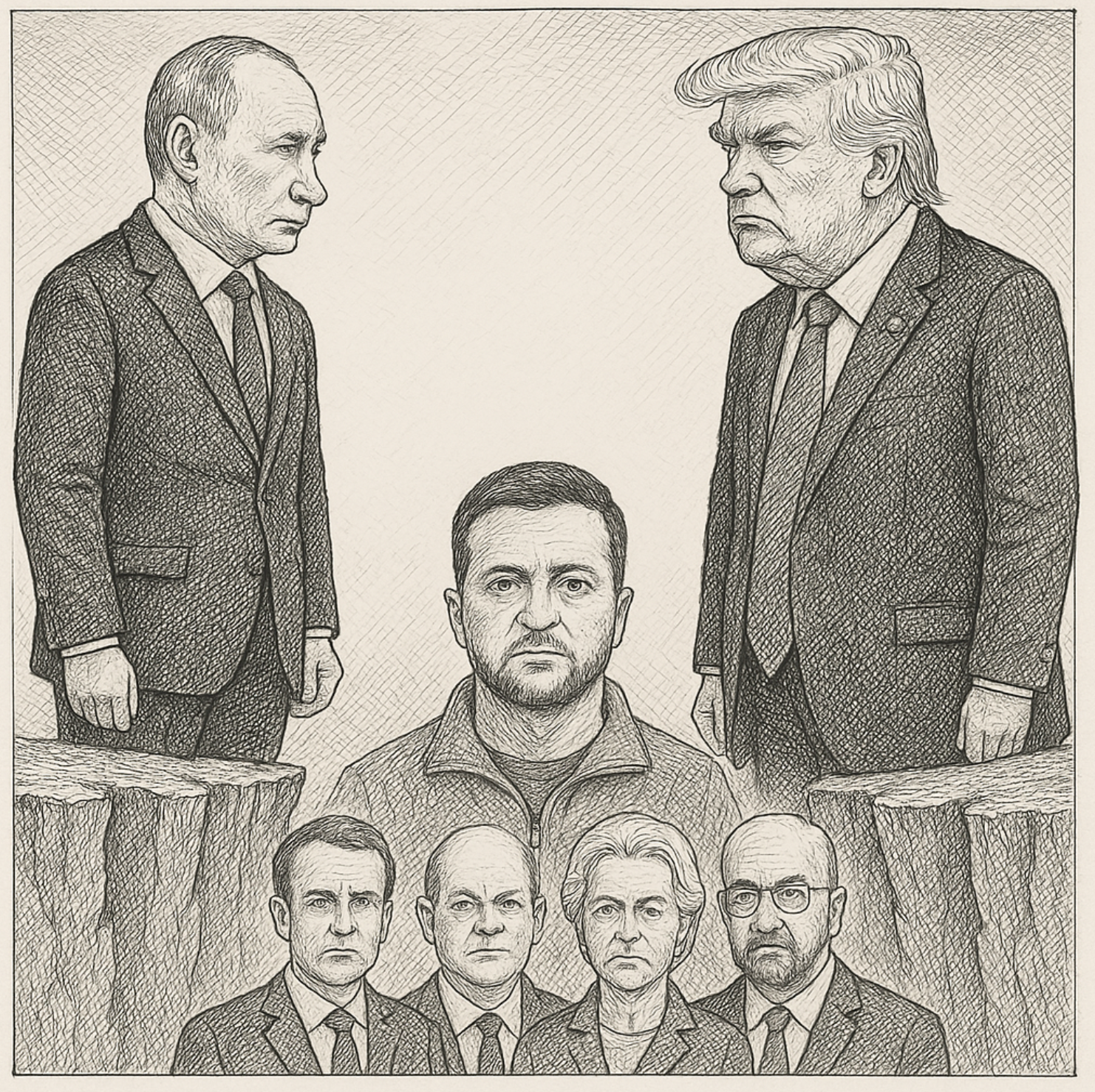
Alaska is the geographical place where opposites touch. And this is true if you consider that here, in a stretch of sea separating two islands named after a hero from the Iliad, runs the border between two entire days—and the line that divides the empires that split the twentieth century. Big Diomede, the easternmost point of Russia, lies only three kilometers from Little Diomede, the westernmost point of the American continent. And—thanks to an agreement on time zones in place since 1884—they are twenty-one hours apart. In 1986, while Reagan and Gorbachev met in Reykjavik to end the Cold War, someone swam across that strait, bridging two worldviews we had thought irreconcilable. And, almost entirely written in the symbols that fuel political marketing, lies the likely outcome of the summit between Trump and Putin—a meeting that could mark the beginning of the end of another war. A war that Europe, at the opposite end of the Bering Strait, may have lost without ever fighting it.
Rumors, and above all common sense, suggest we are close to a turning point in yet another needless war.
Putin benefits from not having to worry about winning upcoming elections; yet fatigue is inevitably eroding trust. Since the start of 2025, according to the Institute for the Study of War, Russian forces have captured about 3,250 square kilometers—just 0.54% of Ukraine’s total territory—at the cost of some 236,000 troops. On the other side of the front, exhaustion also prevails: in March 2022, a Gallup poll showed two-thirds of Ukrainians “ready to fight until final victory” and only one-third favoring “an end through negotiations with Russia.” Today, those positions are completely reversed. And then there’s Trump: he is behind schedule on the loudest of his campaign promises—to end the conflict in a single day. This was a commitment born not only of the financial need to cut the cost of maintaining an empire on the brink of bankruptcy, but also of the political desire to prove he could achieve results where others (Biden) had merely waited.
The terms for getting out of the tunnel are, in the end, dictated by this triple difficulty.
Russia could gain control of the four occupied regions, in exchange for Ukrainian withdrawal from still-unconquered areas of the Donbas (including the fortress city of Kramatorsk), offset by Russian withdrawal from zones—such as those near Sumy and Kharkiv—occupied far from the eastern front. This situation would not be formally recognized by the Americans (though accepted in practice), leaving room for future renegotiations. An equally significant exchange would occur on the alliance front: Ukraine would renounce joining NATO, but its accession to the European Union would be accelerated, providing a shield potentially as valuable as the Atlantic Alliance.
It would be a fragile agreement, but one that could open up a more important opportunity for both Americans and Russians: to resume extracting natural resources and building infrastructure in areas—thanks, paradoxically and dangerously, to climate change—now thawing beyond the Arctic Circle. This region includes much of Greenland, Russia, and stretches through Alaska. It is a game from which Europe will remain excluded (unless Finland, Sweden, and Denmark can show leadership) and which could shift the balance of global power. Just as Europe risks being left out of the deal that could end a war it may already have lost.
It was right to fund Ukraine in resisting a brutal invasion. Even more so was the decision to break free from toxic dependence on Russian gas. Indeed, it was a mistake not to sever economic ties sooner with those who, as early as 2014, had shown they believed force alone could redraw state borders. The mistake, however, was failing to consider how to exit a conflict that almost immediately turned into an endless trench war.
The real problem lies in a decision-making framework that no longer holds up—in a method that allows neither the conception of real strategies nor the drafting of a plan, such as a head of government might produce. Europe should consider the cycle of beautiful but impossible multilateralism over, and move toward serious integration (for example, in defense) among willing partners. And it is not impossible that a definitive diplomatic defeat, such as the one that could come from the other side of the world, might trigger a reaction.
The Americans made a great deal when they bought an uninhabited piece of land from the Russians for seven million dollars: today, Alaska holds the largest oil reserve in the country, which is also the nation’s top oil producer. This time, however, Trump faces a master chess player. And it is possible that the mutual respect between two men accustomed to risk will lead them to an outcome that, for three and a half years, has eluded lighter leaderships.
References:
The Economist, August 2025. Nerves are fraying ahead of the Trump-Putin summit. Link.
The Economist, August 2025. What Putin wants from Trump in Alaska. Link.
The Guardian, August 2025. Ukraine war briefing: Putin says US making ‘sincere efforts’ to end war as Russian troops make gains. Link.